Australia’s clean energy transition is accelerating, and so is the need for innovative recycling solutions to keep pace with it. Wind turbines are a cornerstone of that transition, but like all industrial infrastructure, their components have a finite lifespan.
By 2050, the world is projected to generate over 40 million tonnes of material waste from wind turbine blades alone, much of it consisting of fibreglass.
Made from tiny glass fibres set into a hardened plastic resin, fibreglass is prized for its strength, light weight, and durability. Those same properties, however, make it extraordinarily difficult to manage at end-of-life. Both the glass fibre and resin components are non-biodegradable, and the challenge extends well beyond clean energy.
A collaboration for a new closed-loop innovation
Solving this problem requires two things: the ability to cleanly break fibreglass down into its component parts and a viable destination for those materials once separated.
PVC Separation has developed an innovative separation process that cleanly isolates the distinct material streams within fibreglass composite waste, a technically demanding step that makes downstream circularity possible.
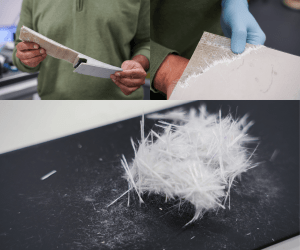
While wood chips recovered through this process find ready applications in power generation, fibreglass makes up the bulk of the output and has traditionally been repurposed into products like furniture, shoes, or concrete. Yet those products reach end-of-life too, returning the material to landfill. The fibres also become shorter with each reuse cycle, increasing inhalation risk and raising serious long-term health concerns.
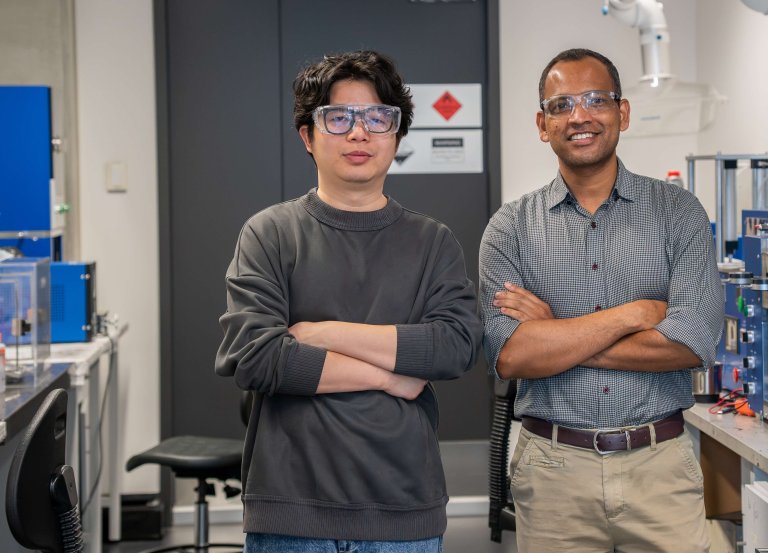
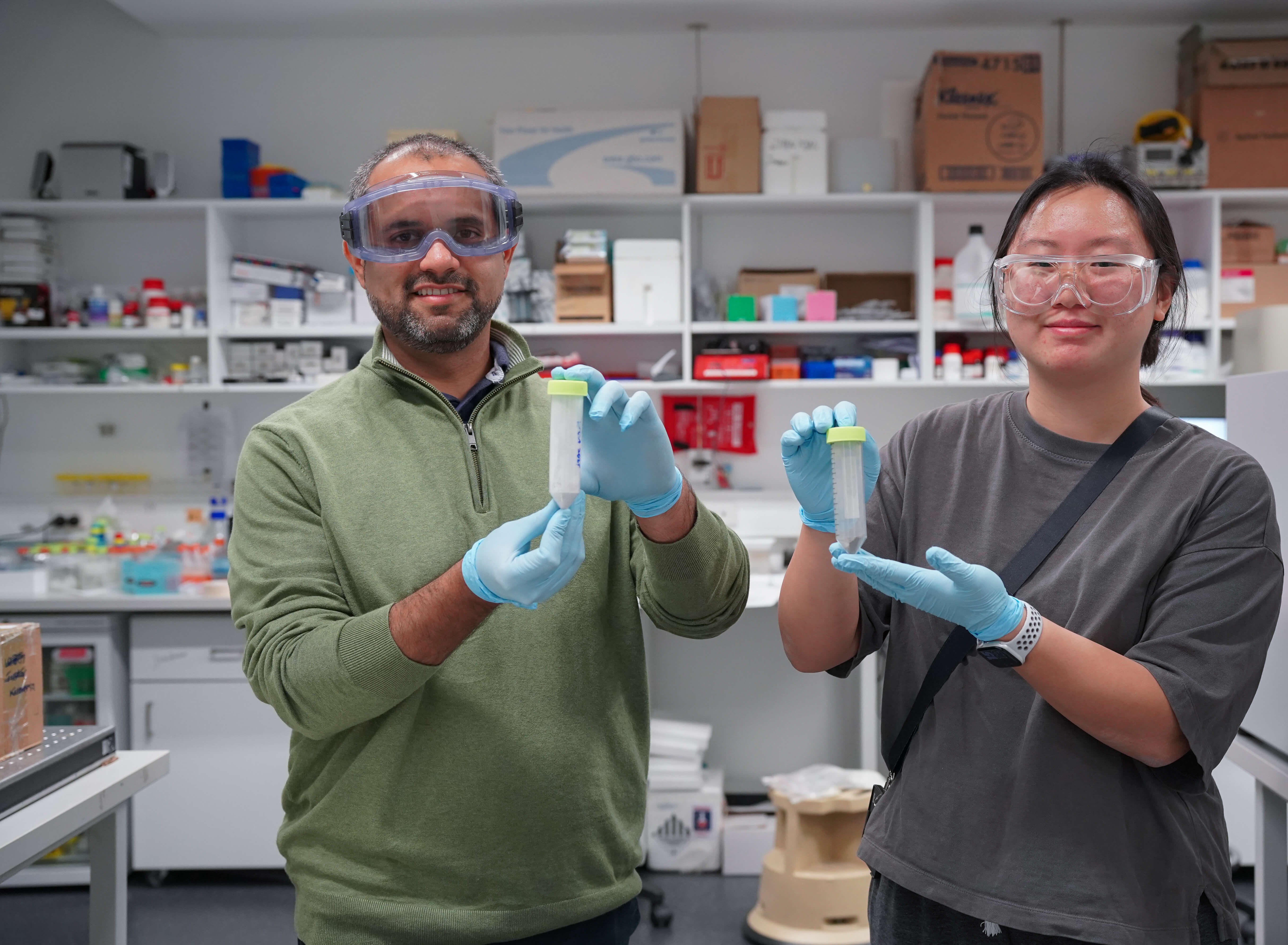
Associate Professor Tushar Kumeria and his research group at UNSW have been working on a more circular solution. Their proprietary process transforms recovered fibreglass into a biodegradable material that breaks down into a biocompatible compound naturally found in soils and used by plants as source of silicon, a micronutrient crucial for plant growth and health.
This unlocks a second life in the agricultural sector, where the material can serve as a delivery platform for active payloads like plant hormones, as well as a source of beneficial silicon micronutrients for crops and livestock.
“The clean energy sector can’t afford to leave this problem unsolved and we believe this collaborative innovation is the solution that closes that loop,” said Dennis Collins, CEO of PVC Separation.
How the TRaCE R&D Voucher is helping to close the loop
To accelerate the pathway to a market-ready product, PVC Separation has partnered with Associate Professor Kumeria and his research team through the TRaCE R&D Voucher Program, combining PVC Separation’s waste separation expertise with UNSW’s materials science capability. The project has four key objectives:
- Chemical and physical profiling: establishing a comprehensive characterisation of the separated fibreglass components, laying the scientific groundwork for all future product development.
- Biodegradation testing: simulating environmental conditions to build the biosafety evidence base essential for regulatory pathways.
- Scale-up validation: demonstrating that the conversion process performs reliably and consistently beyond the lab.
- Prototype development: a working prototype of the agricultural delivery platform that tests its ability to deliver a plant-active hormone and validates new commercialisation pathways.
“This is exactly the kind of industry-research collaboration that drives real impact,” said Associate Professor Kumeria. “PVC Separation has developed a genuinely novel separation technology. Combined with our processing technique, it will allow us to close the loop on a non-degradable waste material by transforming it into useful industrial product.”
With support from the TRaCE R&D Voucher Program, this collaboration between PVC Separation and UNSW is well positioned to move from innovation to impact, turning one of clean technology’s most persistent material challenges into a new commercial opportunity.
Expressions of interest for co-funding up to $50,000 through TRaCE R&D Voucher program are still open. If you are a small-to-medium enterprise, start-up or scale-up seeking easy access to co-designed and co-funded R&D projects in recycling and clean energy sectors, learn more and apply here.