
As the world races towards a low-carbon future, the challenge is no longer just about producing clean energy, it’s about storing it efficiently and cost-effectively. While solar and wind power are rapidly expanding, their intermittent nature means that large-scale and long duration energy storage is essential to ensure a reliable, stable grid.
Currently, lithium-ion batteries dominate the energy storage landscape. However, they are constrained by several issues: the finite availability of critical minerals, environmentally intensive extraction processes, limited duration and operational lifespan, and challenges related to safety and end-of-life recycling.
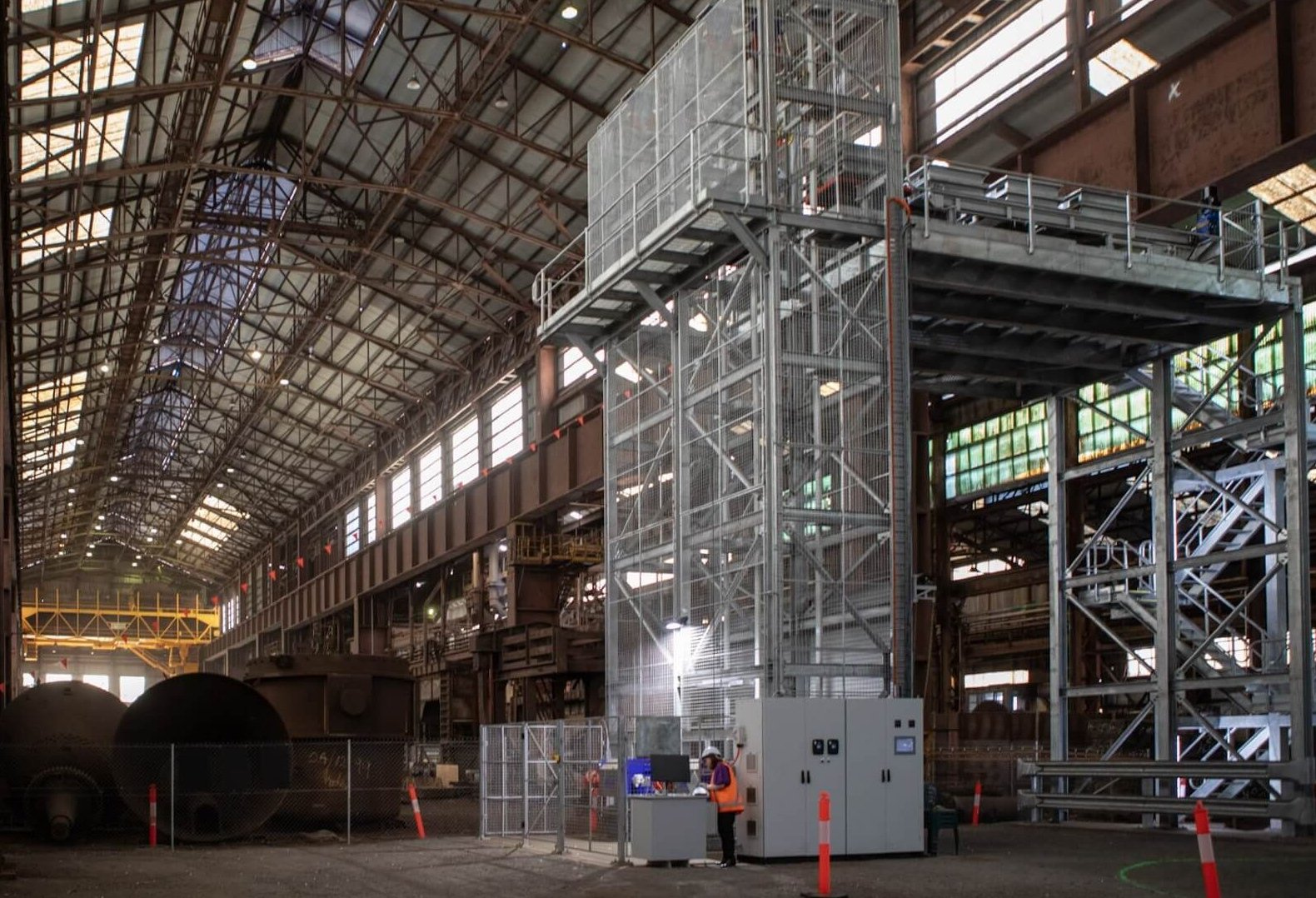
Addressing this need, NSW-based Green Gravity offers a compelling alternative. Working with the University of New South Wales (UNSW) and lead UNSW researcher Dr Matthew Priestley, and supported by the TRaCE program, the team is advancing a gravity-based system for long-duration energy storage. After engaging with the TRaCE TTS (Technology Transfer Squad) team to refine their commercial pathway, Green Gravity has now signed a $2.2 million R&D project through the TRaCE Lab to Market fund to accelerate the development of their technology. The system stores excess renewable energy by lifting heavy weights within disused mineshafts. When electricity is required, the weights are lowered, driving a regenerative motor that converts gravitational potential energy back into electrical energy.
This mechanical system avoids the use of critical minerals, eliminates chemical waste, does not require large volumes of water (i.e. hydro) and offers a service life exceeding 30 years, making it a highly durable and environmentally responsible solution.
Leveraging existing old mine shafts for circular outcomes

What makes Green Gravity’s approach even more compelling is how it repurposes existing vertical mine shafts, a resource that is abundant across Australia, with more than 80,000 legacy mining sites. By repurposing these shafts, the technology minimises the need for new construction, reduces capital expenditure, and contributes to circular economy outcomes by giving new purpose to underutilised industrial infrastructure.
Gravitational energy storage systems like those being developed by Green Gravity are emerging as a cost-competitive, sustainable solution for long-duration storage, complementing other technologies such as batteries and pumped hydro. With a strong alignment with Australia’s geography and industrial legacy, the GESS platform holds significant promise for both domestic and international applications.
The TRaCE full ecosystem in action: powering Green Gravity’s path to commercialisation
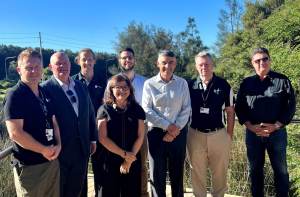
The journey between Green Gravity and the TRaCE program is a powerful example of how a coordinated innovation ecosystem can fast-track deep tech commercialisation. The relationship began with the TRaCE University of Newcastle team, which first engaged with Green Gravity to scope a potential collaboration. Recognising the need for specialised electrical systems expertise, the project was redirected to the TRaCE UNSW team, demonstrating how the two universities work hand-in-hand to match industry needs with the right expertise across the network.
Green Gravity then worked closely with TRaCE’s Technology Transfer Support (TTS) team on a first short R&D project to define the technical challenges and commercial opportunities. This foundational work led to a successful application for a $2.2 million project funded through the TRaCE Lab to Market fund, focused on undertaking joint development to analyse and design the key electrical systems that underpin the Gravitational Energy Storage System (GESS) technology.
The project also benefited from the TRaCE Mobility program, where researcher Dr Matthew Priestley was embedded on-site at Green Gravity’s Innovation Campus facility in North Wollongong for four weeks. His time with the company enabled a deep dive into the system’s technical landscape, aligning UNSW’s research strengths with Green Gravity’s engineering roadmap and setting the Lab to Market project up for success.
“Working with UNSW gives us access to deep technical expertise, particularly in power systems and grid integration,” says Mark Swinnerton, Founder and CEO of Green Gravity. “Our collaboration brings together industry knowledge and academic research to ensure this technology is efficient, safe, and ready for commercial deployment.”
From early engagement to embedded research and scaled R&D support, Green Gravity’s TRaCE journey highlights how the program’s integrated approach—spanning two universities, mobility funding, TTS support, and commercialisation grants—can build momentum at every stage of development. This is the kind of end-to-end ecosystem needed to bring high-impact technologies to market.


