
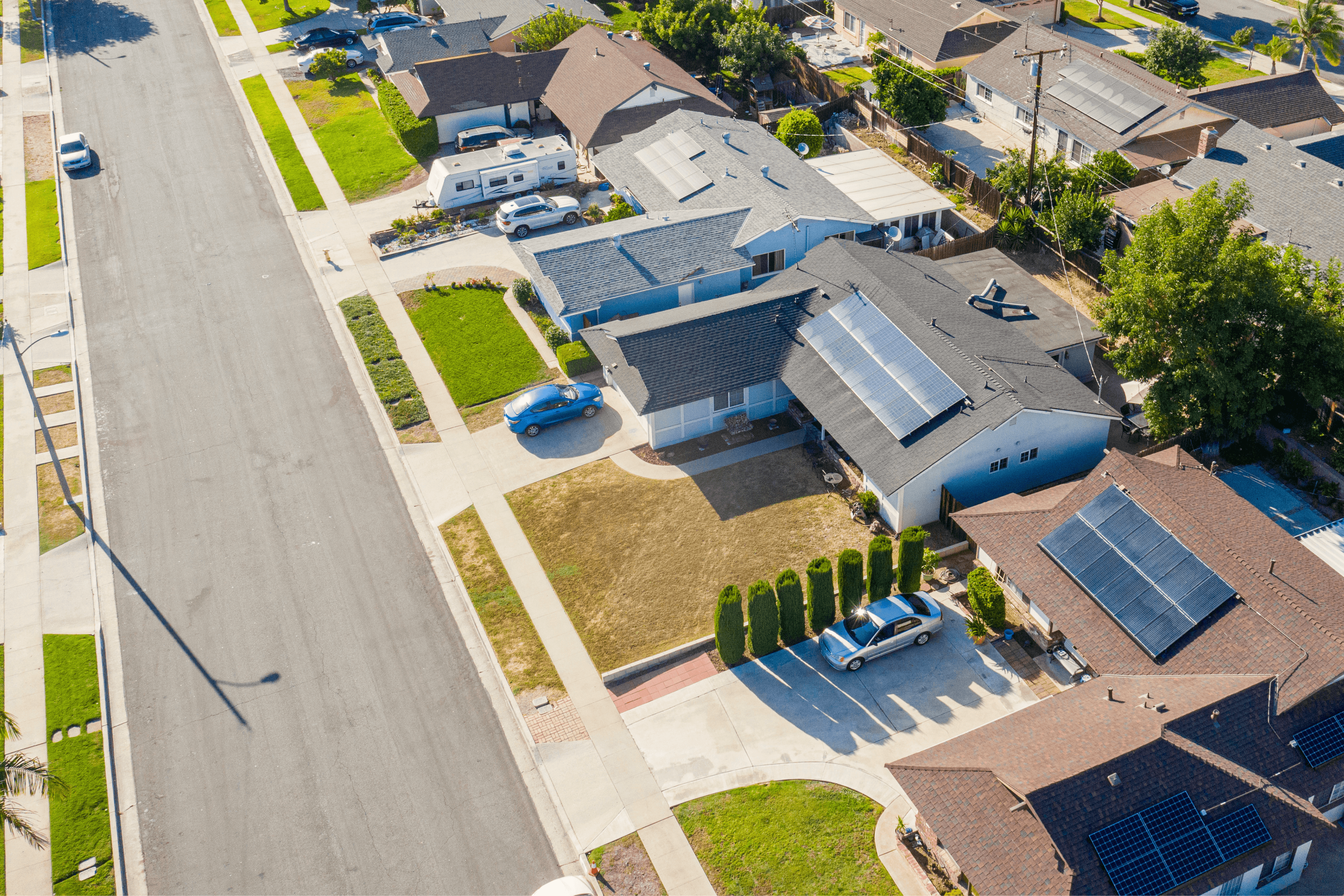
Australia has the highest rate of rooftop solar uptake in the world, with enormous, untapped generation potential sitting on rooftops across the country. Yet most of those panels and batteries operate in isolation with no coordination between neighbours, streets, or suburbs. The result is lost energy potential on a massive scale.
Virtual power plants (VPPs) offer a way to change that. By linking distributed solar and battery systems into a single coordinated network, a VPP can supply energy to the grid when it’s needed most, reduce peak demand, and deliver lower bills for participants. The challenge now lies in building the software intelligence to make it work reliably, at scale, and across thousands of different devices
A TRaCE-supported project between UNSW and Sydney-based installer Aussie Solar Batteries is working to solve this problem.
Giving distributed energy a shared brain
Led by Associate Professor Guo Chen from UNSW’s School of Electrical Engineering and Telecommunications, the UNSW research team are developing an AI-enabled platform called the Smart Energy Hub, designed to coordinate fleets of residential and commercial solar-battery systems into a next-generation VPP. The research focuses on forecasting, demand-side management, optimisation algorithms, and digital-twin modelling to enable smarter coordination of distributed energy resources.
A key challenge the project addresses is coordinating hardware from many different manufacturers. The platform aims to integrate existing devices through standard communication interfaces, avoiding costly hardware retrofits and allowing new sites to be onboarded quickly.
“This collaboration allows us to take world-class research out of the lab and apply it directly in real homes and businesses,” says Steven Yu, CEO of Aussie Solar Batteries. “By combining UNSW’s AI and energy expertise with our large-scale deployment capability, we can accelerate smarter, more efficient solar and battery networks across Australia.”
Taking tests into the real world
Rather than testing in a laboratory, the team will validate the Smart Energy Hub through field trials coordinated by Aussie Solar Batteries across residential and commercial sites in Sydney. These trials will generate real operational data on system performance, customer experience, and grid interaction to produce the evidence base needed to support broader rollout across Australia.
“This project is about closing that gap and fast-tracking solutions that improve reliability, reduce energy costs, and unlock the full potential of virtual power plants,” Yu added.
The project is scheduled to run until the end of 2026. Beyond the research itself, the partnership is focused on co-developing a scalable commercial model and joint commercialisation strategy. With support from TRaCE’s commercialisation ecosystem, the team aims to ensure the benefits of this Australian clean energy innovation remain firmly within Australia.


