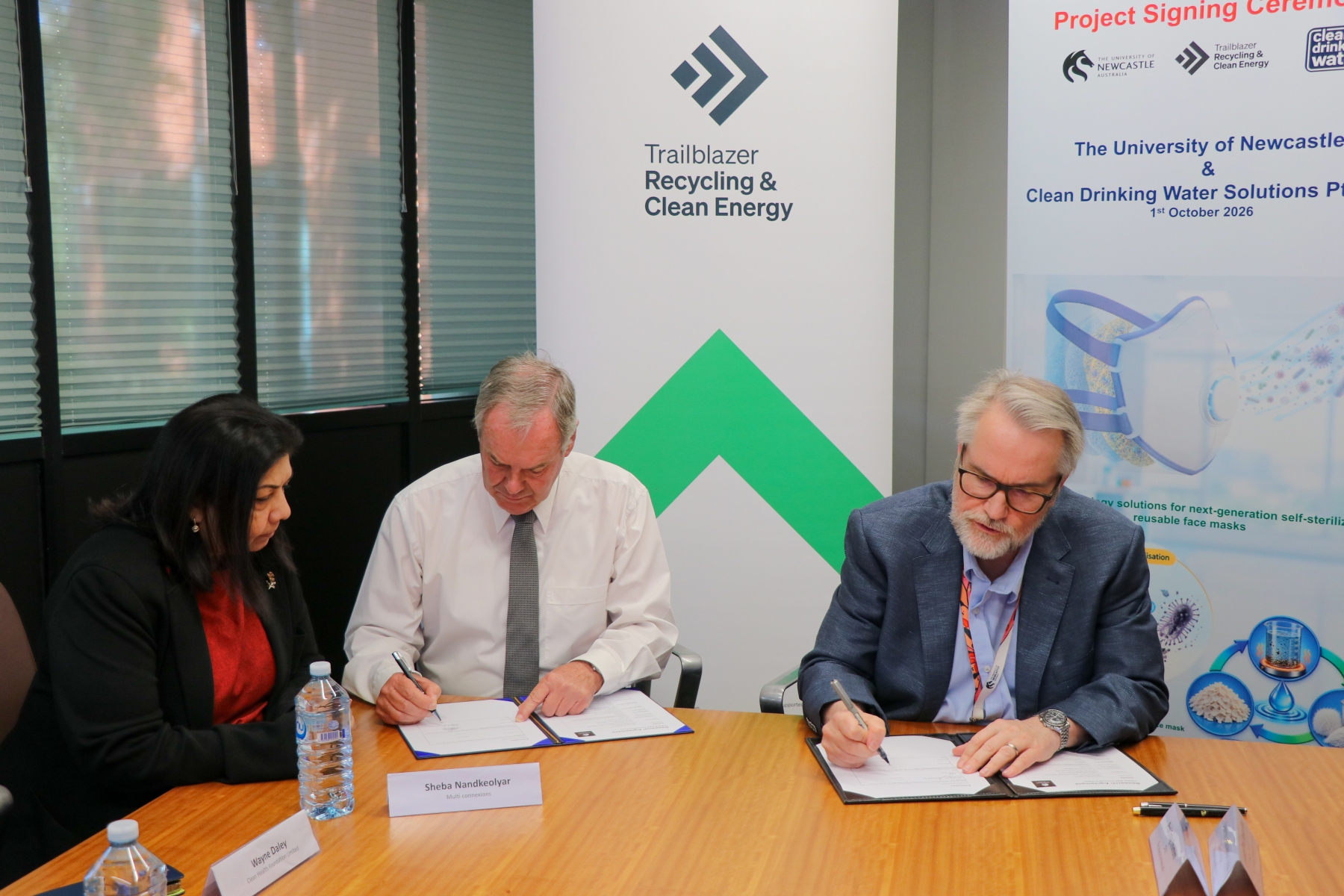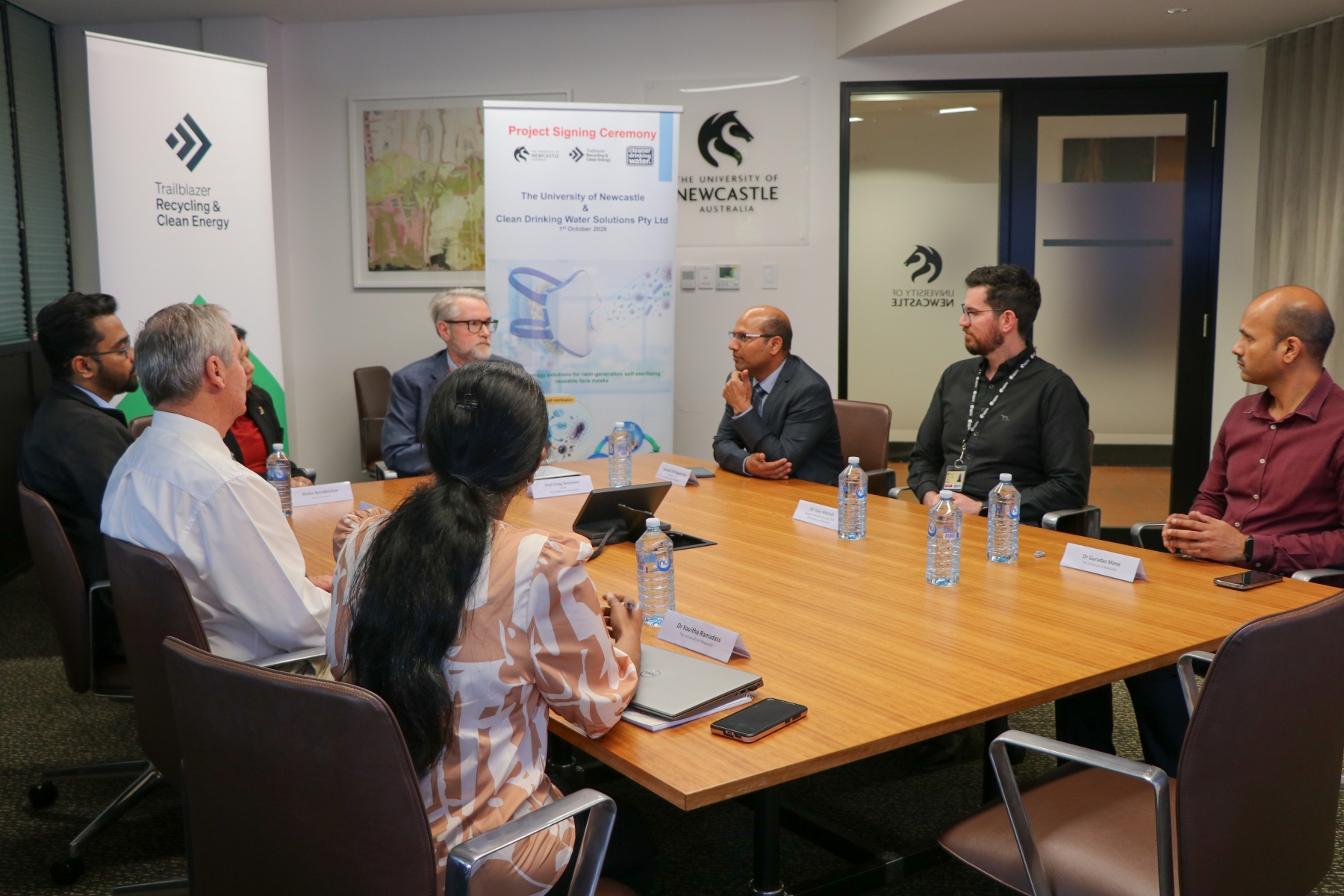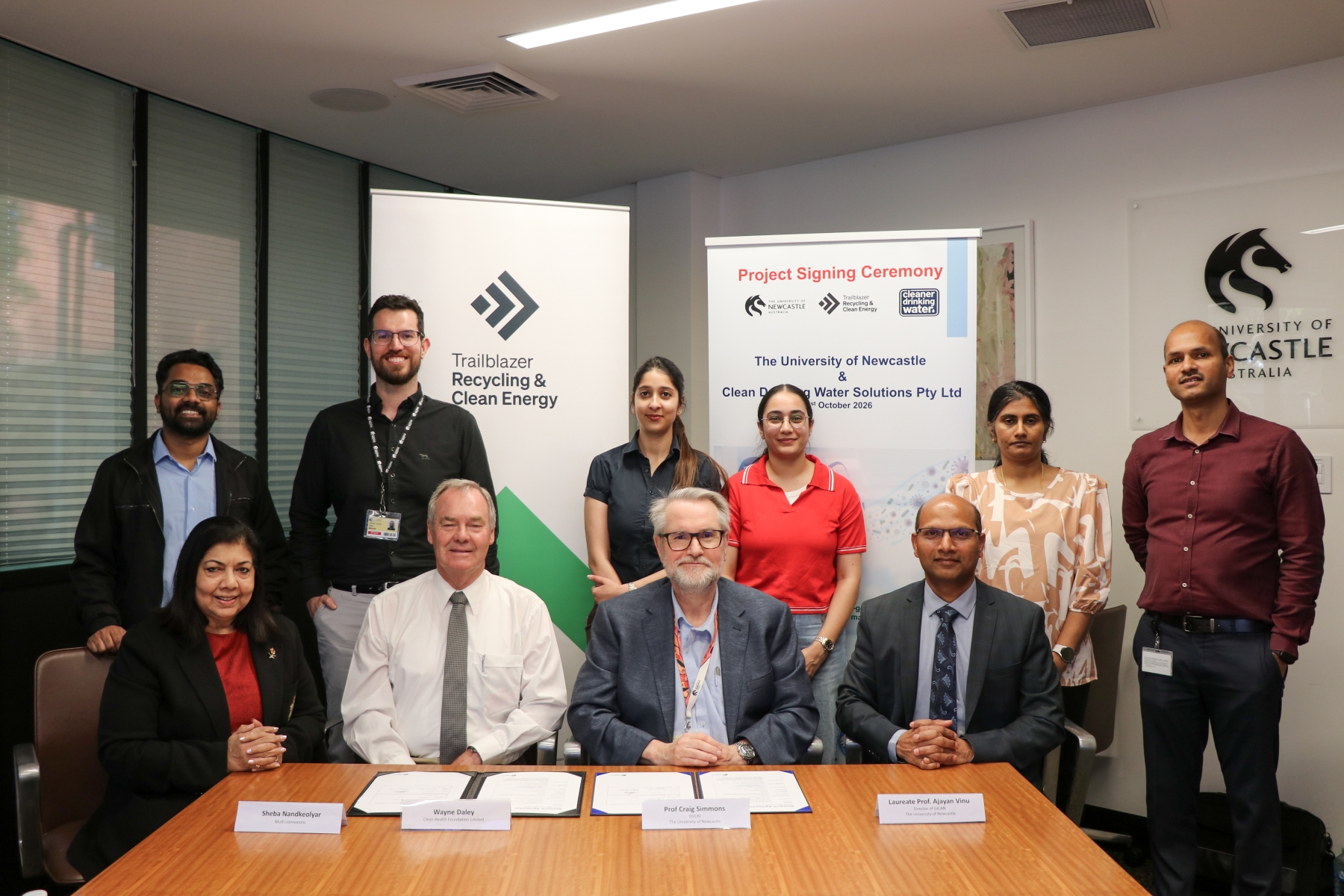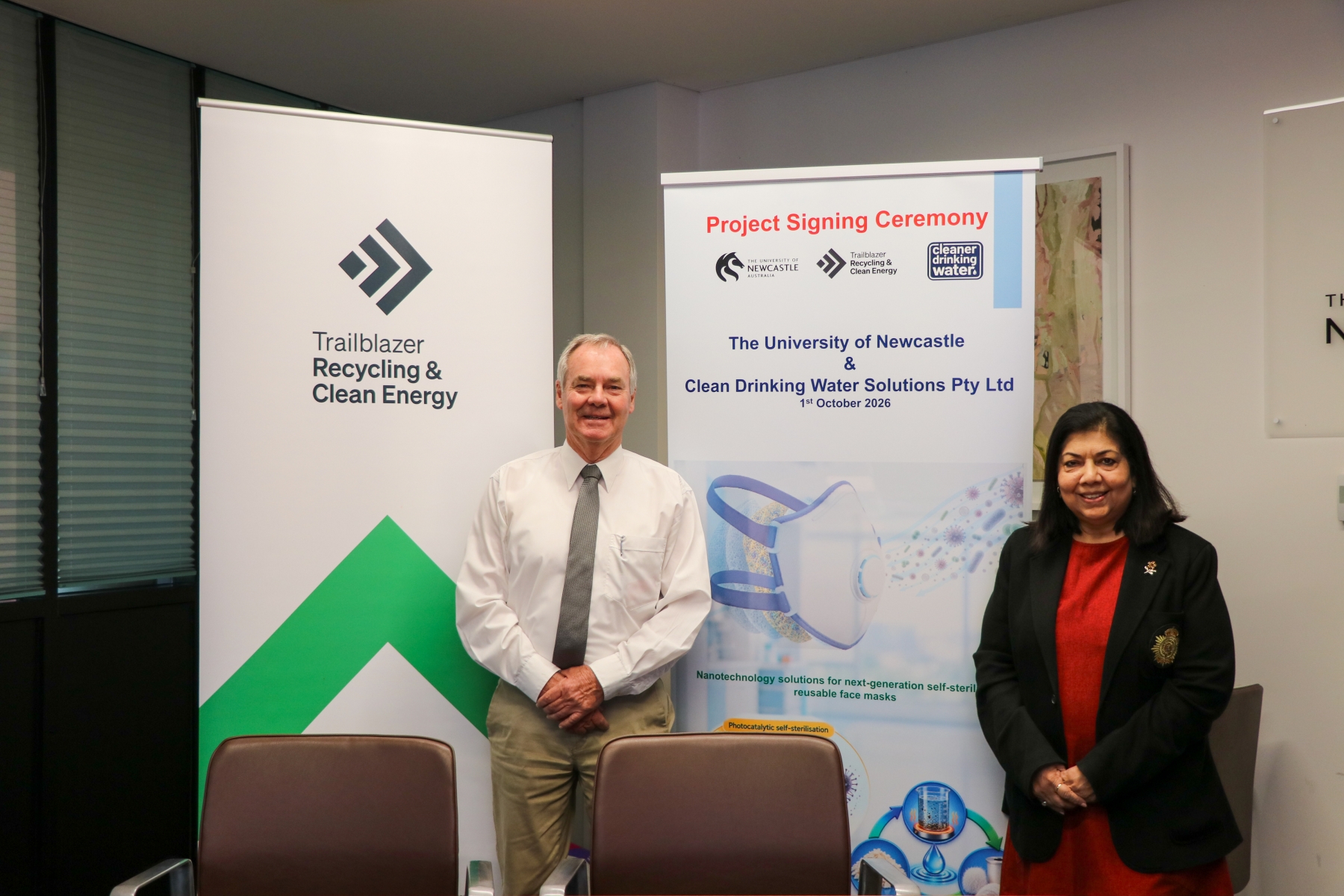
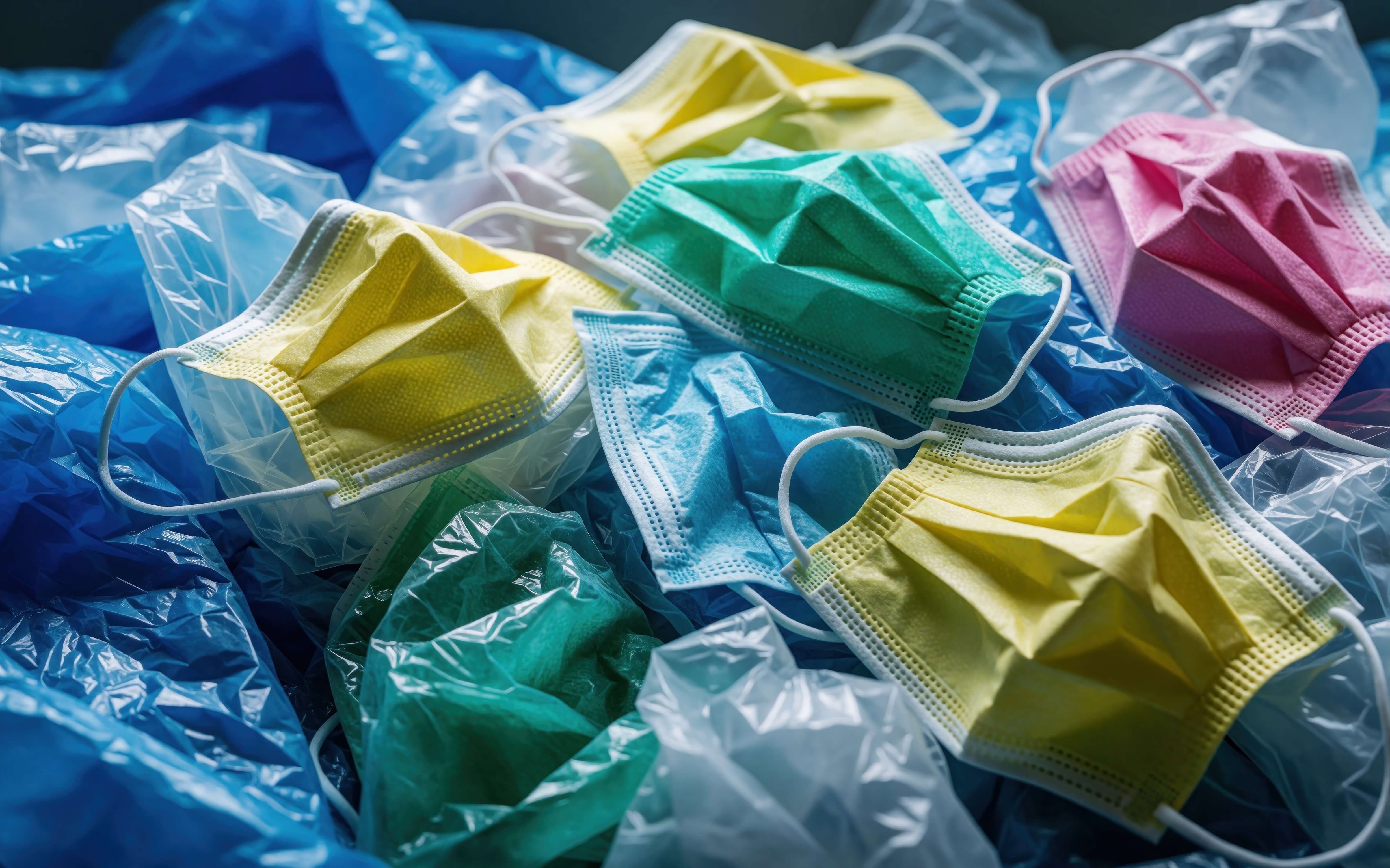
Millions of facemasks are used every day across healthcare, industry, transport and community settings, yet most are made from single use plastics destined for landfill. A new TRaCE Concept to Pilot project at the University of Newcastle is bringing together Clean Drinking Water Solutions and Laureate Professor Ajayan Vinu to change that.
This collaboration is working towards developing a next-generation reusable facemask that combines high-performance filtration, self-sterilising functionality and a circular end-of-life recovery pathway. The project is helping bridge the gap between laboratory innovation and commercial validation by providing the expertise and support needed to advance promising technologies towards pilot-scale deployment.
The proposed facemask uses advanced fibre technology to create a multilayer filtration system with features that extend well beyond disposable masks.
At its core is an innovative filtration layer made from ultra-fine fibres capable of photocatalytic self-cleaning and disinfection. This means that it uses light to trigger a chemical reaction that helps break down harmful microbes and contaminants on the mask’s surface.
The design also incorporates a natural polymer layer that helps prevent bacterial growth while making the mask more comfortable to wear and easier to manufacture. Together these materials are designed to provide effective filtration, low breathing resistance, and improved durability under real-world conditions.
Beyond performance, the project addresses a growing environmental challenge.
Every minute, an estimated 3 million facemasks are thrown away worldwide. Over the course of a year, that exceeds 1 trillion masks, creating 10 million tonnes of waste and generating an estimated 60 million tonnes of CO2 emissions.
The team is also developing a low-energy recovery process in attempts to reclaim valuable PVA polymers and cellulose fibres at the end of the product’s life, recovering around three tonnes of reusable waste from every million masks processed.
By enabling material recovery and reuse, the technology has the potential to reduce reliance on virgin resources and lower lifecycle emissions by 30 to 50 per cent.
While reusable facemasks have been explored previously, few solutions have successfully combined high filtration performance, humidity tolerance, self-cleaning capability and a credible recycling pathway. This project aims to address all four challenges simultaneously, creating a foundation for a more sustainable approach to personal protective equipment (PPE).
As demand grows for products that deliver both performance and sustainability, this collaboration demonstrates how industry and researchers can work together to develop practical circular economy solutions that reduce waste, lower emissions and create new opportunities for advanced manufacturing.