
Australia has the highest solar uptake in the world, with 1 in 3 homes powered by solar, and with it comes an increasing demand for safer and more affordable household energy storage.
While lithium-ion batteries dominate the market, they face their share of challenges including supply chain vulnerabilities tied to critical minerals and ongoing safety concerns around thermal runaway and fire risk.
Seawater batteries are an emerging alternative solution that could help reshape Australia’s residential energy storage landscape.

Unlike lithium-ion systems, seawater batteries use abundant, non-toxic materials like sodium extracted from seawater, eliminating reliance on scarce minerals like lithium, nickel and cobalt. The non-flammable, water-based electrolyte makes these batteries inherently safer, while Australia’s extensive coastline provides ready access to a cost-effective and sustainable resource.
Despite these advantages, current seawater batteries suffer from low energy density and poor cycling stability, with performance degrading rapidly over repeated charge cycles. As a result, the technology has been largely confined to labs and small prototypes.
A TRaCE-supported project is working to overcome these challenges and bring rechargeable seawater batteries to Australian homes.
Unlocking the potential of seawater batteries
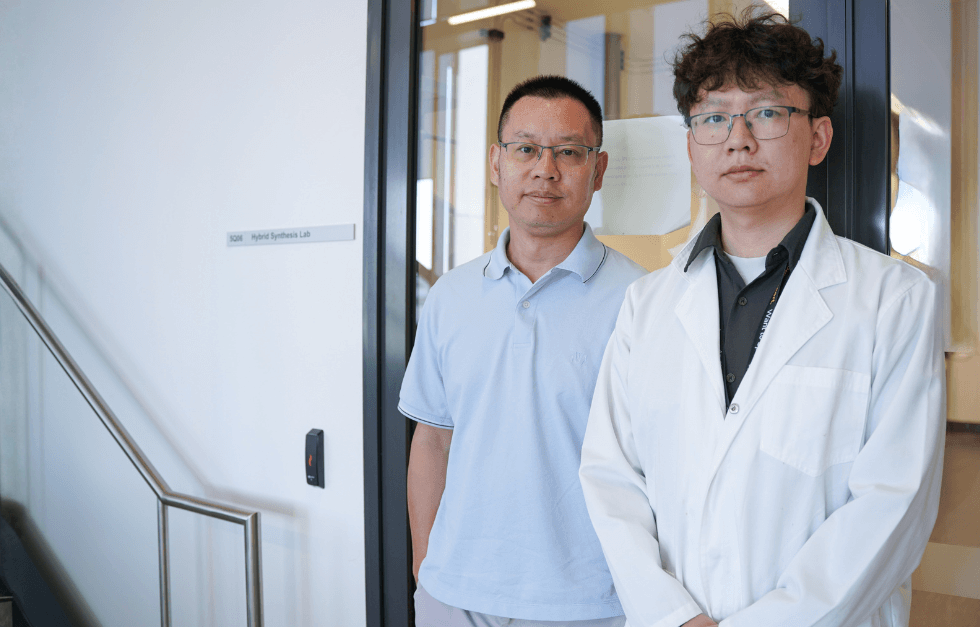
The team of UNSW researchers, led by Professor Dewei Chu, are developing scalable carbon nanomaterial-based electrodes that dramatically improve both energy density and cycling stability of seawater batteries. By engineering the electrode structure at the nanoscale, the team can optimise how sodium ions move in and out of the battery, reducing energy losses and extending operational lifespan.
“The key challenge has always been capacity and stability,” said Professor Chu. “By engineering advanced carbon nanomaterials based electrodes, we’re overcoming the traditional limitations of seawater batteries and unlocking the durability and efficiency needed for commercial systems.”

The project aims to push seawater battery technology from early-stage research to a small-scale commercial demonstration. The team is integrating multiple battery cells with electronic circuits and a battery management system tailored for residential applications, ensuring the technology can be safely deployed in homes.
The ultimate goal is ambitious: to develop a 10kWh residential energy storage system with a target cost of less than $100 per kWh. This would represent a significant cost reduction compared to current lithium-ion systems and positions seawater batteries as a potential competitive alternative in the battery energy storage market that is predicted to exceed $120 billion by 2030.
By turning one of our most abundant natural resources into clean energy storage, this research exemplifies how Australian innovation can support energy security, reduce our reliance on global supply chains, and accelerate the transition to a sustainable energy future.


