Australia’s construction sector faces a longstanding challenge: vast volumes of surplus materials that go unused, undocumented, or sent straight to landfill. Superyard, founded by Ritchie Djamhur, is tackling this issue by transforming leftover construction resources into valuable assets – think Facebook Marketplace for the construction sector, but purpose-built for ease of access, regulatory alignment, and circular economy outcomes.
This mission is already playing out on the ground. Through projects redistributing 10+ tonnes of film set materials and repurposing over 20 tonnes of temporary construction materials from Melbourne Cup Carnival events, Superyard has shown how surplus materials can be quickly diverted from landfill into meaningful reuse. These real‑world examples provided an early foundation for the next phase of the platform’s evolution.
Through a TRaCE R&D Voucher project, Superyard partnered with researchers at the University of Newcastle, alongside industry supporters including Lake Macquarie City Council and Fulton Hogan, to advance the SuperGroup platform. This collaboration enabled the integration of robust sustainability metrics, helping companies understand the environmental impact of material reuse, meet evolving regulations, and adopt practical tools for keeping resources in circulation.
The result is a strong example of how industry and research can work together to reduce waste, improve material visibility, and prepare the sector for a more sustainable future. In this interview, Ritchie shares what the partnership made possible, the outcomes achieved, and how it is shaping Superyard’s next chapter.
Q: What does this project mean for Superyard at this stage of your journey?
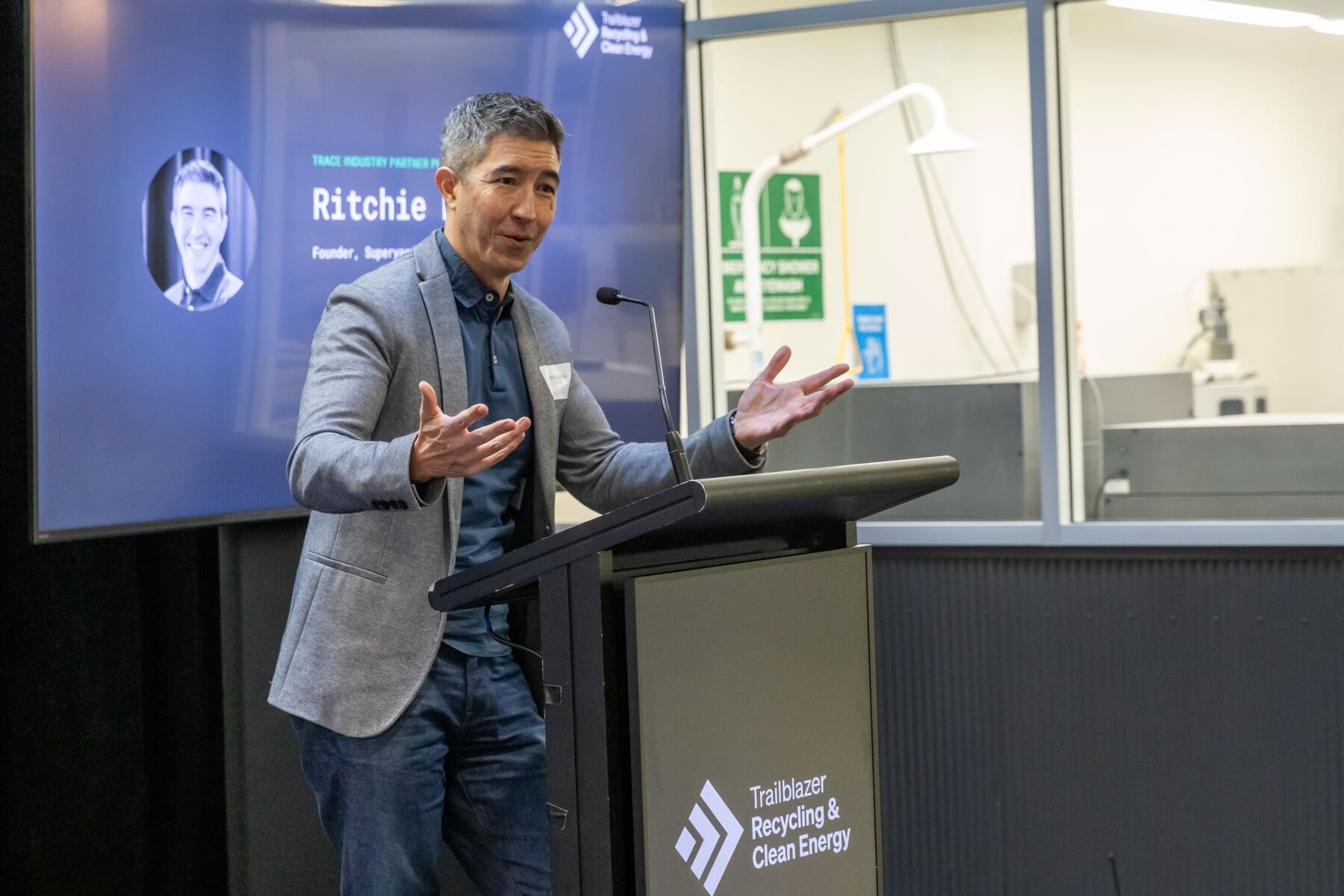
Ritchie: “This project has been a major accelerator for us. It confirmed that the market is ready for smarter systems to manage surplus materials and helped us transition from a simple marketplace into a data‑driven platform that can genuinely support circular construction at scale. It’s shown us what’s possible when technology, research, and industry align around the same goal to reduce waste and improve material visibility.”
Q: How did the collaboration with the TRaCE program strengthen the platform?
Ritchie: “The research partnership allowed us to move far beyond basic inventory management. Dr Josephine Vaughan’s work enabled us to integrate sustainability metrics, like embodied carbon and human health impacts, that we simply wouldn’t have had access to on our own. These insights make the platform far more valuable to companies that need to meet emerging sustainability reporting requirements.”
Q: What has the research partnership enabled that you couldn’t have achieved independently?
Ritchie: “The partnership helps us move from a strong concept to an evidence‑based framework. We understood the problem and we created Superyard to address the problem of material waste and underutilisation, but we didn’t have a structured way to quantify the impact. The research gave us a consistent methodology to measure environmental, economic, and operational outcomes using real project data.
Importantly, it also validated that this isn’t just a Superyard problem; it’s an industry‑wide gap. That external validation is something we couldn’t achieve on our own.”
Q: What capabilities or insights did the partnership with TRaCE bring that you didn’t have before?
Ritchie: “The biggest shift was around measurement and credibility.
TRaCE brought academic underpinnings to how we define and calculate value, particularly around embodied carbon, waste diversion, and cost savings. They also helped identify which metrics actually matter to industry and which ones are too complex or impractical to implement for now.
Another key insight was behavioural: most organisations won’t change how they work to adopt circular practices. That reinforced the need for Superyard to integrate into existing workflows rather than trying to disrupt them. And given that behaviour change is critical to the success of any circular innovation, seamless integration is what we’re working on now.”
Q: How has this collaboration positioned Superyard for the next stage of your platform’s development?
Ritchie: “It positions Superyard as more than an online marketplace.
We’re now building toward being a system that not only facilitates material reuse but also measures and reports its impact in a way that aligns with emerging policy and sustainability requirements.
That opens up new opportunities with larger organisations and government, where the ability to demonstrate outcomes in carbon, cost, and waste is essential.”
Q: What practical outcomes have emerged from the project so far?
Ritchie: “We now have a platform that gives organisations clear visibility over surplus materials, helps reduce procurement spend, and provides environmental impact information they can report on. It’s a step toward a circular system where leftover materials are recognised as assets rather than burdens.”
Q: What’s next for the Superyard platform?
Ritchie: “Actually, as I mentioned, it’s bigger than the platform. This initiative has provided a huge amount of credible information and insights that can, and should, be shared with the wider sustainability community and the many and varied players in the construction industry.
We look forward to being a prominent advocate for sensible change that provides benefits across all key indicators. Just like the ‘enterprise’ part of being a social enterprise, we also have to show the ‘economy’ impact of being circular.
At a platform level, we’re focused on expanding the sustainability dataset, improving automation, and scaling across more councils, contractors, and infrastructure partners. The long‑term goal is ambitious but achievable: a national network of organisations using shared tools to keep materials circulating, cut emissions, and reduce the industry’s reliance on new resources.”
Superyard’s collaboration with researchers and industry partners has demonstrated the real impact of aligning innovation with practical on‑the‑ground needs. By combining academic expertise, regulatory insight, and industry‑tested functionality, the project has delivered a platform that not only increases material visibility but actively supports Australia’s transition toward a circular construction economy. With new sustainability data capabilities in place and strong industry interest emerging, Superyard is now well positioned to scale its impact, turning surplus materials into valuable resources and helping reshape the future of construction one reuse opportunity at a time.
Are you developing breakthrough tech in clean energy or recycling? The TRaCE R&D Voucher Program supports Australian SMEs to fast-track R&D and de-risk early-stage innovation with co-funding and expert support.