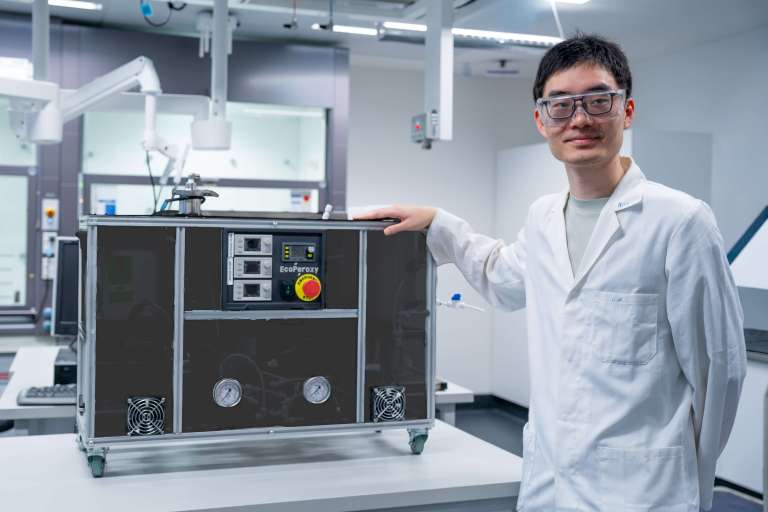
Recently, TRaCE Academic Enterprise Fellow, Associate Professor Hedda Haugen Askland was invited to join an Australian delegation to Germany focused on post-mining land use, mine closures, and regional transition. This delegation formed part of an ongoing Australian-German knowledge exchange, bringing together researchers, government, industry and regional stakeholders to exchange knowledge and develop future collaborations in post-mining transformation.
Find out more about Associate Professor Askland’s learnings from this experience below.
It is a spring morning in the Hunter Valley. The sun has just risen and I’m driving west to Singleton to present my research on the energy transition. As I crest a hill, the landscape opens up. A long coal train passes to my left, its hoppers blending into the horizon, where an almost haunting layer of orange dust hangs in the morning light. Although there is no mine in sight, coal mining is immanently evident.
For over ten years, I have travelled this route to talk with communities about coal mining, energy and extraction. Mining has shaped the Hunter’s physical, economic and social landscapes. Now, as NSW pursues its net zero targets, the region faces further change. Coal mine closures and renewable energy development are progressing across the region; however, these processes are at large treated independent from one another and a coordinated framework is needed to ensure the Hunter’s future beyond coal.
The separation between the renewable energy roll out and mine closure stood in contrast to what I encountered during a six-day study tour to Germany in September. The visit, supported by the Trailblazer for Recycling and Clean Energy (TRaCE) and the College of Human and Social Futures, was organised by the German-Australian Chamber of Industry and Commerce. Alongside researchers and representatives from local government, industry, unions and community organisations, I visited three of Germany’s principal coal regions to learn about the country’s approach to coal phase-out and transition.

Beyond the energy transition: Germany’s approach to structural change
Germany, one of the world’s largest brown coal producers, has committed to phasing out coal-fired power generation through a legislative act that will see the closure of all its lignite coal mines by 2038. Approximately €40 billion (AU$63 billion) has been committed to supporting the structural transformation of coal-dependent regions, including Lusatia, Central Germany and the Rhineland, alongside separate compensation arrangements for affected energy companies.
Four interconnected features distinguish Germany’s approach: political leadership, a clear commitment to coal phase-out, coordination across levels of government and dedicated public investment. As we travelled through Brandenburg, Saxony and North Rhine-Westphalia, we saw numerous examples of this, including the Lausitz Science Park in Cottbus and Brainergy Park in Jülich. In these places, research, innovation and new industries are being developed to create economic opportunities beyond coal. Travelling between the various sites, I watched enormous windmills turning in the autumn wind through the bus window. The future is already present in the rapidly increasing renewable energy investment, making the transition visible wherever we looked.
The ambition of the German government is unmistakable – investment is producing results and the regions are changing. The significance of this change was, however, evident not only in the landscape and through the various initiatives we heard about, but it was also reflected in the language used to describe the changes underway. Rather than using the ambiguous term ‘transition’, the representatives we met spoke of ‘structural change’, emphasising not simply the ‘phase-out’ of coal but more vividly the ‘phase-in’ of new industries and opportunities.
Planning for a post-coal future
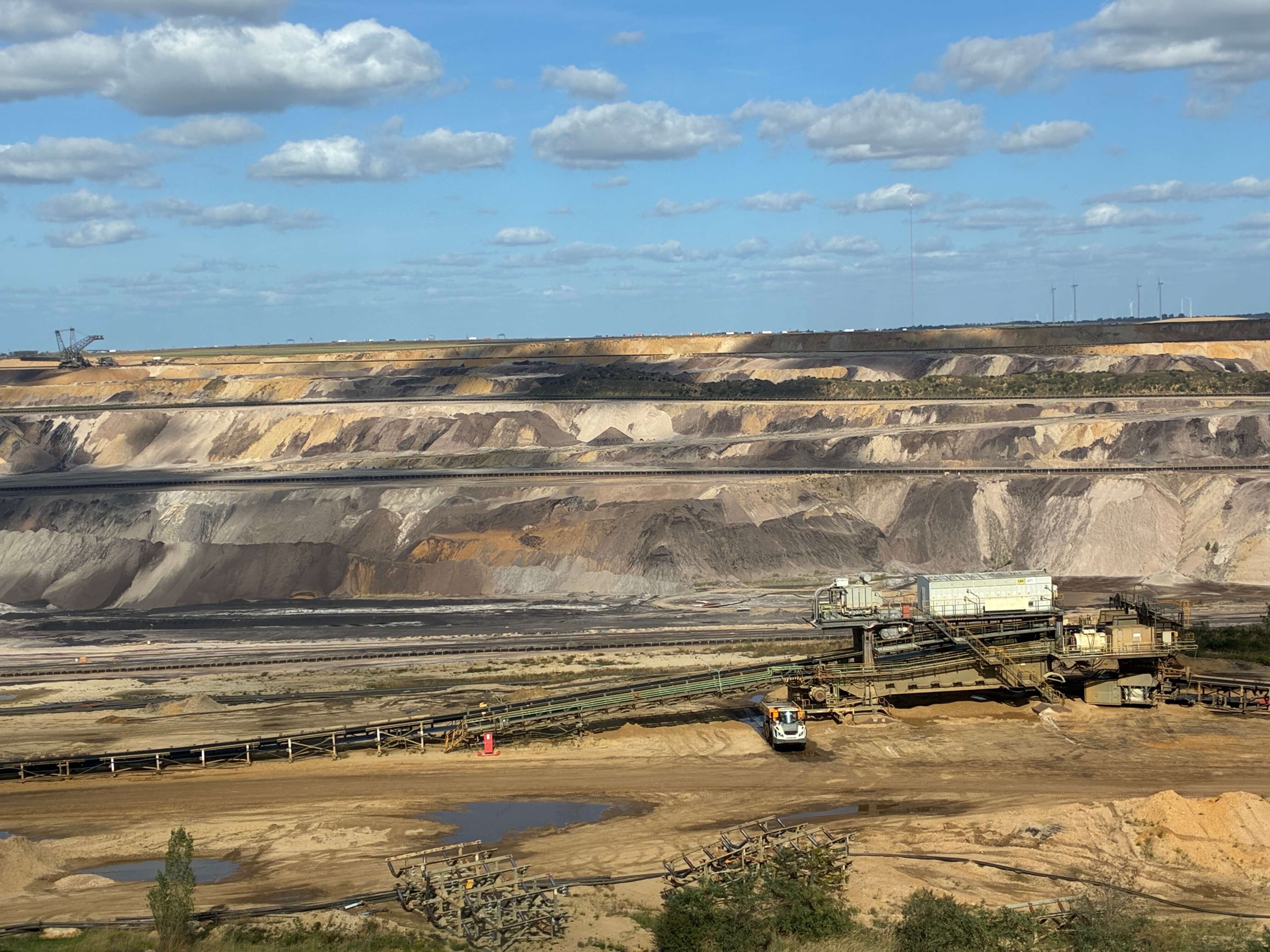
Reflecting on what I saw and heard, what stood out most was the importance of clear leadership, cross-governmental collaboration and a planned approach that recognises the ruptures that closure will bring and the need to transform both physical and social landscapes. In Lusatia, for example, we saw how former lignite mines are being rehabilitated and transformed into extensive lake systems. These are complex, long-term undertakings that are considered as part of broader regional development and future land use. By comparison, the Hunter’s current plans include more than 25 final voids, which have not yet been identified for future reuse, offering scope to explore new economic, environmental and community outcomes.
In Essen, we visited Zollverein, a former coal mining and processing complex transformed into a UNESCO World Heritage site, preserving the region’s industrial heritage while creating new cultural, educational and economic opportunities. This again differs from the Hunter Valley, where mine closure planning generally prioritises infrastructure removal over opportunities for industrial heritage preservation. It showed how moving away from coal is about more than replacing industries; it is about negotiating relationships with the past and aspirations for the future. As one German government representative explained: “We are talking about the soul of our regions.”
As a social researcher, I was, however, struck by the relative silence around community reception of the change, how community relations are managed and how local voices are incorporated. Throughout the week, we heard surprisingly little about community engagement, social legitimacy or how conflicts and social impacts are managed, although informal conversations pointed to ongoing tensions and social costs. While institutional coordination and investment are important foundations for transition, they do not necessarily guarantee meaningful community participation or equitable outcomes.
The limits of a market-led transition
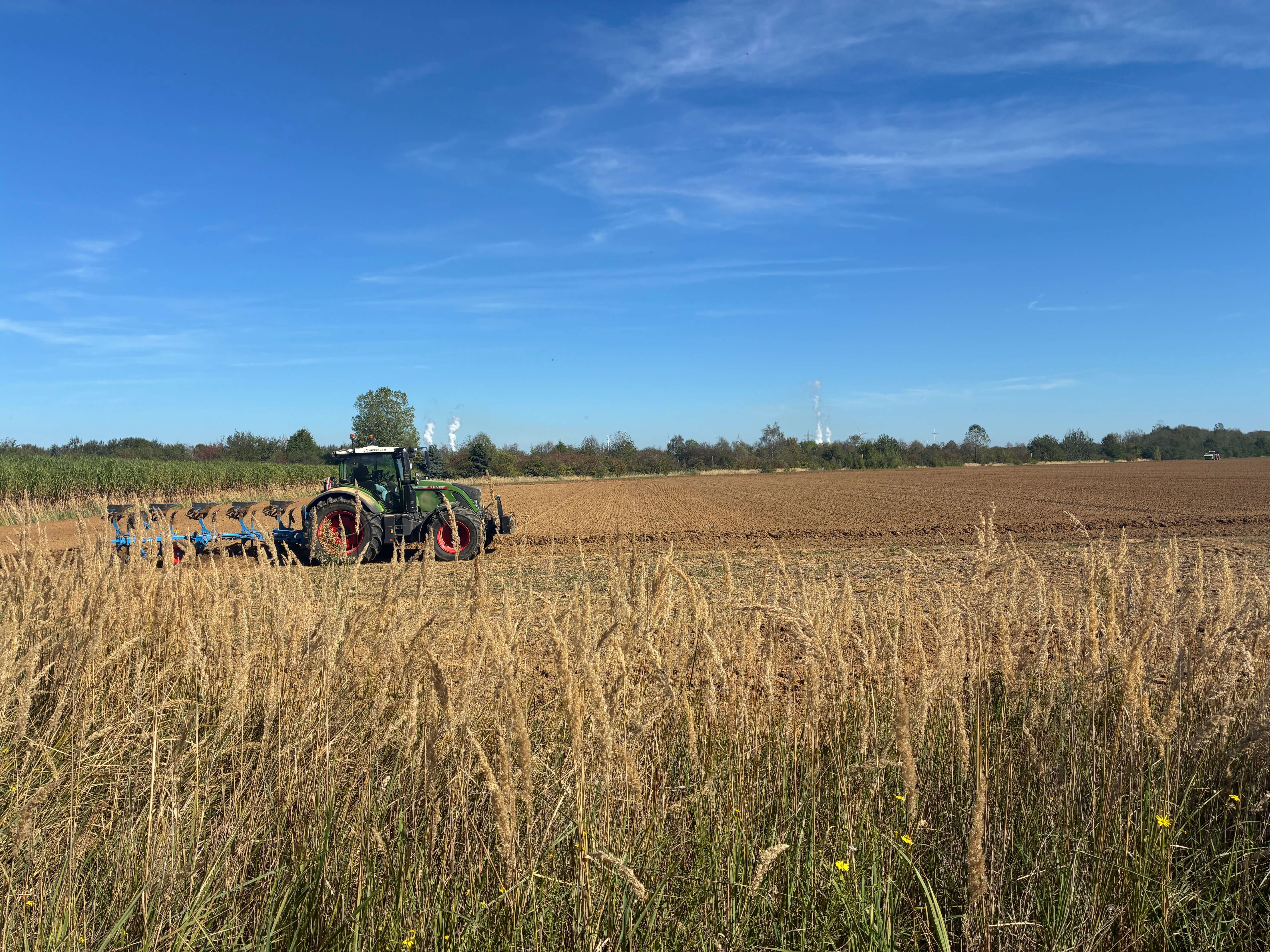
Only weeks after returning from Germany, I was back in the field for my TRaCE Fellowship, At the Frontline: Local Councils and the Renewable Energy Transition, examining how local councils are experiencing and responding to the development of Renewable Energy Zones (REZs) in NSW. Travelling through the New England and Central-West Orana regions, I reflected on the difference between Germany’s ‘structural change’ approach and the renewable energy transition unfolding in regional NSW.
The REZs represent a significant investment in Australia’s energy future. Yet, while infrastructure receives substantial investment, less investment is available to the broader transformation of the regions hosting it. Responsibility for cumulative social, economic and environmental consequences remains fragmented across government agencies, developers and councils. One local council worker felt that “there is a lack of clear strategic leadership at state level” with another warning that “people don’t see the enormity of what is approaching us”.
In comparison to Germany’s approach, our fieldwork in regional NSW revealed a sense of uncertainty, frustration and a lack of visible strategic leadership across hierarchies. We met council workers and councillors who were exhausted from managing a transformation for which they feel inadequately resourced and over which they have little power.
Emphasise ‘critical’ in state-critical: Resourcing, coordination and collaboration
My experiences in Germany and NSW reinforced how readily we approach the energy transition as an infrastructure challenge rather than structural change. Successful regional transformation needs collective responsibility, dedicated resources, government coordination and genuine community collaboration.
Germany’s experience does not offer a ready-made solution, especially regarding community participation. Nevertheless, the comparison between Germany and New South Wales reinforced something fundamental: an energy transition is not necessarily a just or sustainable regional transition. Decarbonising is essential, but so is delivering positive outcomes for communities and landscapes. Both of these experiences have highlighted the importance of combining investment and managing impacts with actively planning regional futures to achieve a successful and prosperous transition. This includes resourcing communities and empowering them to help shape their futures.
Associate Professor Hedda Haugen Askland, TRaCE Academic Enterprise Fellow