TRaCE Enterprise Academic, Associate Professor Hedda Askland is exploring the impact of the renewable energy transition on regional communities across New South Wales.
Associate Professor Askland is a social anthropologist specialising in the human dimensions of land-use change and regional transition. She has spent many years working alongside regional communities to better understand the social impacts of large-scale development projects, post-mining land use, and renewable energy projects.
Through her TRaCE Fellowship, she is advancing applied research that supports local councils and communities to navigate the renewable energy transition. This includes strengthening community participation, enhancing local decision-making, and improving long-term outcomes for regional areas.
At the Frontline: Local Councils and the Renewable Energy Transition
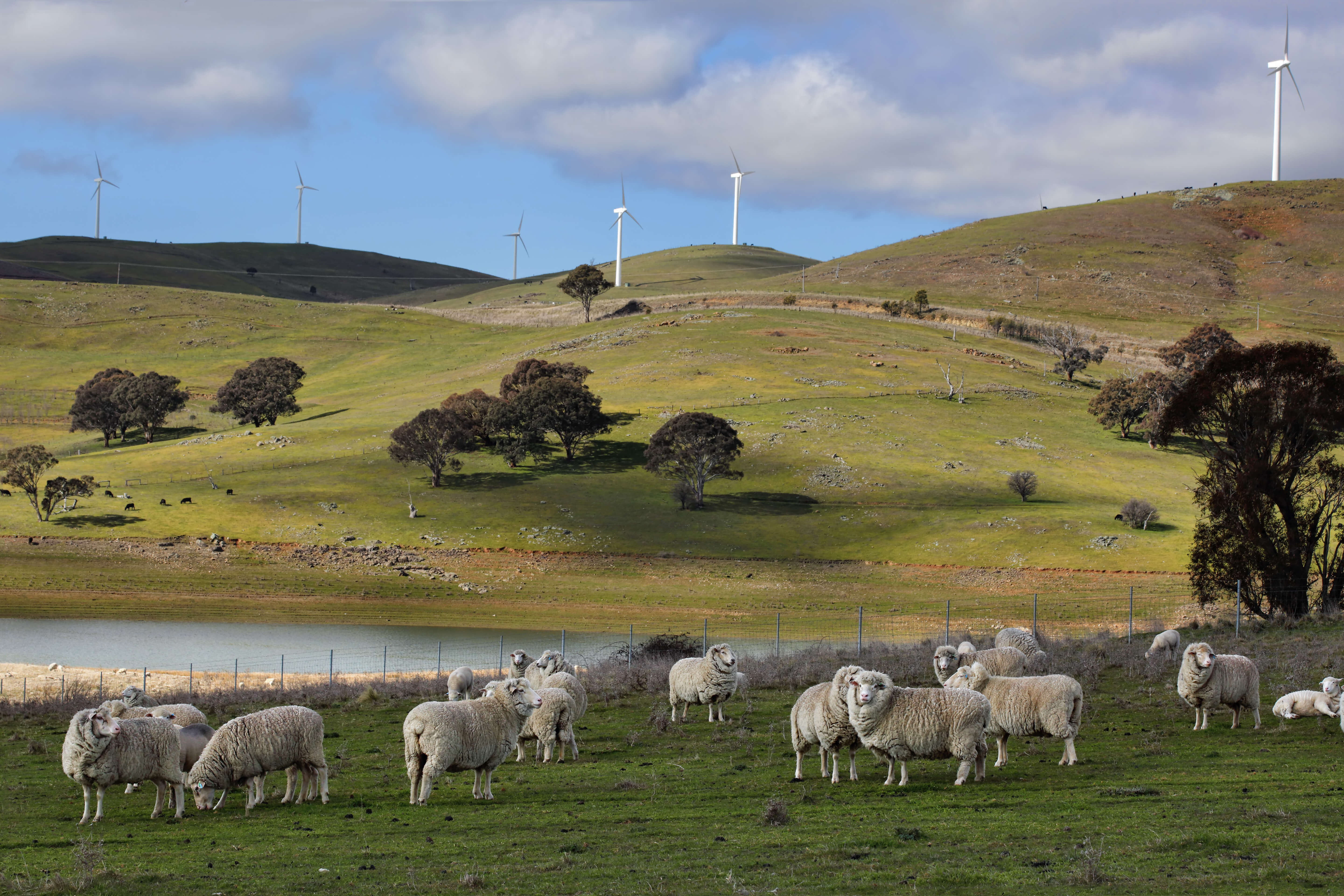
As Renewable Energy Zones (REZs) continue to roll out across NSW, local councils are finding themselves at the centre of one of the state’s most significant infrastructure transformations.
Designed to support Australia’s transition to a clean energy future, REZs are bringing unprecedented levels of development to many rural and regional communities. While these projects offer significant opportunities for economic growth and regional development, the pace and scale of change are also creating complex challenges for local governments.
Many councils report feeling underprepared to manage the demands of the transition. They are balancing competing land uses, responding to community concerns, coordinating with industry and government stakeholders, and navigating uncertainty.
All often with limited resources and guidance.
Recognising the need to better understand and document these experiences, Associate Professor Askland is leading a new project that will examine how councils are managing the early stages of REZ development and identify lessons that can inform future renewable energy initiatives.
While existing research has highlighted international best-practice approaches to community engagement and social licence, valuable insights are also emerging from within NSW’s own renewable energy regions.
By documenting these place-based experiences as the transition unfolds, the project aims to provide real-time insights into how renewable energy development is affecting regional communities and local governments.
Central to the project will be a series of case studies involving four local councils at the frontline of the renewable energy transition. These case studies will explore how communities are beginning to evolve into renewable energy hubs, while investigating how factors such as council size, local economies, demographics, and community attitudes towards renewable energy influence experiences and outcomes.
This research will examine both successes and challenges, identifying what has worked well, the challenges encountered, and how future processes can be improved. It will also consider the entire lifecycle of renewable energy sources from a local government perspective, including emerging issues such as the management of end-of-life solar infrastructure.
Importantly, the project is designed to support practical outcomes. Through close collaboration with councils and key stakeholders, it aims to strengthen local government agency, contribute to building social licence, and deliver better outcomes for regional communities.
Key outputs will include codesigned guidance for councils and policy recommendations to help state and federal governments support communities experiencing rapid energy sector change. By giving voice to local government experiences, this project will help ensure the lessons emerging from NSW’s renewable energy transition are captured, shared and applied.