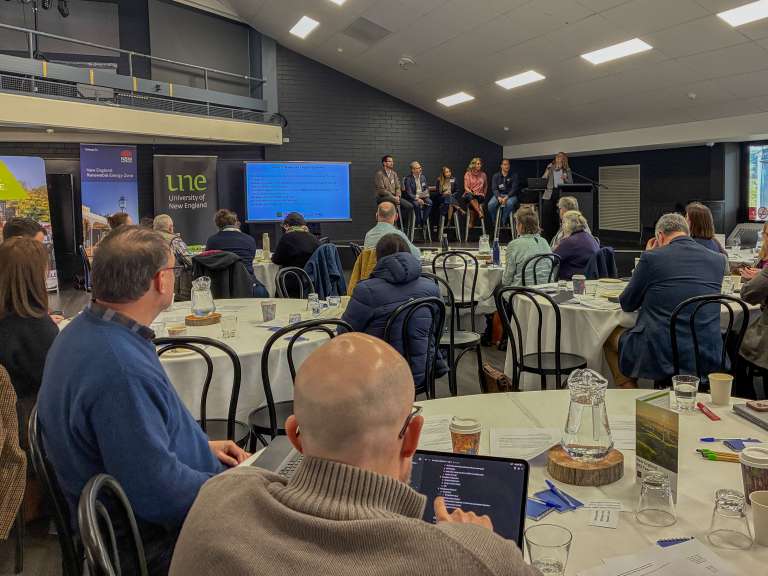

On June 25, we brought together a room full of founders, academics launching spinouts, investors and university stakeholders to tackle a question that rarely gets discussed openly: how does university equity in spinouts actually work and does it give founders an edge, or make investors hesitate?
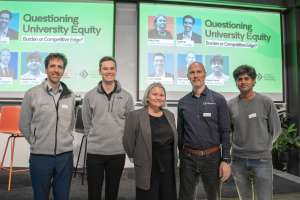
Moderated by Kylie Frazer, Investor in Residence at UNSW, the panel featured:
- Charlie Ill, CEO, Investible
- Bram Hoex, Co-founder, P2AgentX
- Priyank Kumar, Co-founder, ZenQuo
- Josh Leverett, Co-founder, OzAmmonia
The discussion moved from how equity stakes get structured, to how investors favourably view early cap tables of spinouts, to what best practice support looks like when a university, its founders and outside capital all sit at the same table. Over the course of the evening, five themes stood out.
Five key takeaways from the night
1. There is no single path into founding a spinout
Every founder on the panel took a different path to commercialisation. Some started as researchers with no commercial background and learned by winning small university translation grants before working up to institutional investment. Others came in with prior industry experience and built a commercial structure from day one. One also joined an existing founding team partway through, bringing skills picked up outside the lab.
The common thread across all of them is that commercialising research takes a solid technical foundation, a genuine grasp of the commercial numbers, and the willingness to find the problems industry actually cares about, which are rarely the ones being solved in the lab.
2. University resources are a bigger advantage than most founders expect
Across the panel, the same list of benefits kept coming up: subsidised lab space and shared equipment, salary support from the university through the early risky years, help navigating IP and patents, streamlined HR and finance through university research contracts, and access to specialist networks, entrepreneurial programs and funding schemes. Several founders noted that replicating the infrastructure needed to advance their technology alone would cost millions of dollars before a company even starts trading.
For example, TRaCE’s Enterprise Academics program provides both early career and senior academics with salary support to spend time establishing their spinout and testing its commercial potential in the first year or two.
Access to talent pipelines and the credibility that comes with a university affiliation were also flagged as underrated advantages that help unlock grants and open doors with investors.
For investors, university backing lends credibility to the technology and provides greater confidence during technical due diligence.

3. Equity itself is rarely the real sticking point. Speed and clarity are.
The room agreed that a well-structured equity stake is not, on its own, a deal-breaker. What genuinely slows deals down, and what investors flagged as the biggest risk to investment, is a slow or unclear negotiation and contracting process.
Unresolved questions about IP ownership, licensing and cap table structure can take months to work through, and by the time they’re resolved, the terms on the table may no longer reflect the deal a founder thought they were getting. The advice from the investor side was to have your IP position, licensing and governance questions answered well before you go looking for venture capital.
4. Cofounding teams and clean cap tables matter
Investors on the panel were candid that solo-founder spinouts are harder to back, and that complementary technical and commercial co-founder pairings are one of the more attractive features of university spinouts specifically.
However, equity should reflect ongoing contribution, not just an early claim. A founder who stops pulling their weight becomes a concern for investors, especially at later raises when incoming investors scrutinise who still holds equity and push to redistribute inactive stakes. Vesting, agreed early through a founders’ agreement, avoids that conversation happening under pressure.
5. Australia is ahead of many peers but there is more to learn from overseas universities
UNSW is considered as more founder-friendly, particularly on the transparency of its equity discussions and the breadth of its support programs. But the panel pointed to Singapore as a unique case where universities go a step further by running in-house venture funds and treating spinout creation as a national priority. The comparison was a reminder that while Australia’s settings are improving, there is still ground to make up against ecosystems where the incentives are aligned from government level down.
Building a deep tech company inside a university system means navigating grants, IP, cap tables and investor expectations all at once, on top of the science itself. Conversations like this one exist to make that path a little more transparent and to help founders, investors and universities get the settings right for each other.
On the whole there is increasing momentum within Australian universities to help researchers and entrepreneurs navigate these challenges, connecting them with the networks, funding and guidance needed to commercialise technologies.
If you’re working in this space and want to explore how we can support you, we’d love to hear from you.