Humans are producing more waste than we could ever sustainably manage. ARC Ento Tech LTD is a biotech company addressing this global issue head on by transforming waste into valuable products.
They’ve partnered with Dr Arash Tahmasebi, a NIER researcher at the University of Newcastle on a TRaCE R&D Voucher project to investigate if their SynCoalTM product, made from plastic and inedible organic waste like paper, textiles and wood, could partially substitute metallurgical coal in the cokemaking process for blast furnace ironmaking.
A treasure trove of this material is thrown out every day. But only clean plastics can go through the recycling process, so the items thrown in our rubbish bins don’t usually make the cut. ARC Ento Tech has found a solution by harnessing the power of nature to clean them up.
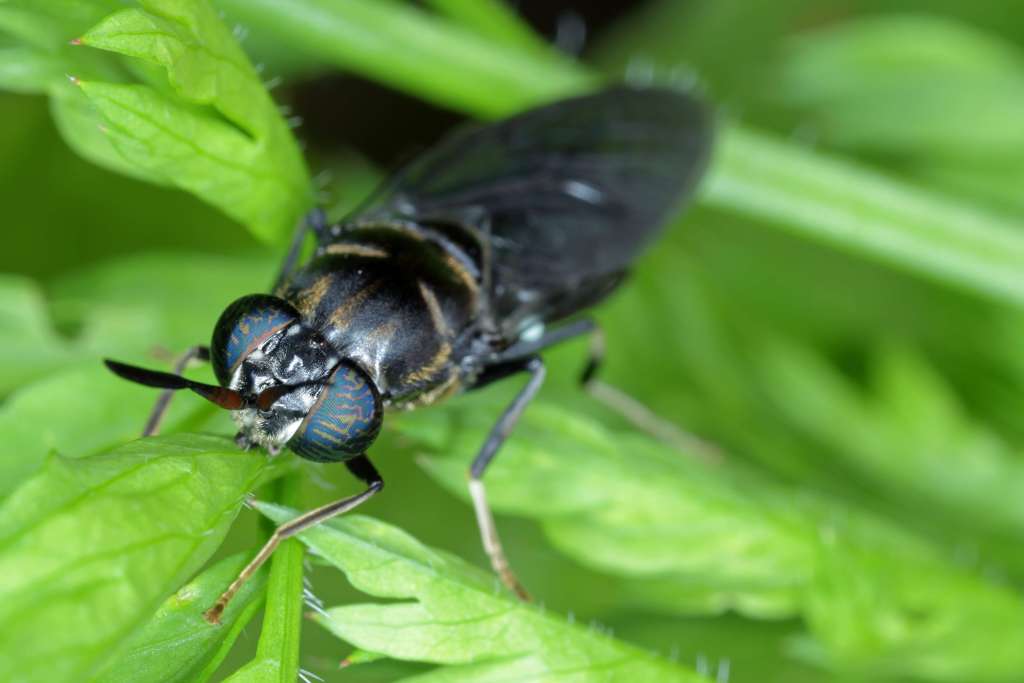
Meet the black soldier fly, the little insect with a big appetite that could help us win the war on waste.
During their first stage of life as larvae, black soldier flies are driven by one primary instinct: an insatiable appetite.
They’re not picky; they’ll eat almost anything, from food waste to manure. Their job is to eat and grow as much as they can because when they become adults, they lose their mouths, marking the beginning of the end of their life cycle.
From 2018-2019, Australia alone generated 75.8 million tonnes of solid waste and sent 20.5 million tonnes of that to landfill.
Mr Ramon Atayde, a management professional with over 35 years of experience in the mining industry, and his brother Mr Ricky Atayde, and Entomologist specializing in hatchery management and insect culture, saw the potential of soldier flies to cut this number back.
They founded ARC Ento Tech and developed the ARCProcessTM, which enlists black soldier fly larvae to eat organic waste off inorganic waste, preparing the material for the next phase where it can be recycled into valuable products.
“We saw the opportunity from the resource perspective. The world has been too fixated on wastefulness and wasteful thinking, now we have to be resourceful. When you change your perspective and look at everything as a resource, it doesn’t matter what it is, it won’t ever become waste.”
“While some may see plastic waste, we see the combination of carbon and hydrogen. Simply that.”
– Mr Atayde, Chairman and Managing Director of ARC Ento Tech.
Even the larvae go on to serve another purpose. Once they’ve had their fill, they’re used for high-protein animal feed (ARCMealTM) and organic fertilizer (ARCSoilTM).
ARC Ento Tech’s decentralised ARCProcessTM means they can deploy the flies where needed, cutting out logistics and transportation costs.
“We have a patent pending method of growing the flies that’s never been done before.”
“Imagine a giant washing machine but instead of water and clothing, you have a billion black soldier fly larvae cleaning plastic waste,” laughed Mr Atayde.

Introducing SynCoalTM
Given Mr Atayde’s background in mining operations, supporting the steel industry’s transition to lower-emission technologies was front of mind when exploring potential products they could make from the cleaned inorganic material.
“We’re going to run out of coal, and it’s becoming more difficult and controversial to open new coal mines.”
“Other companies turn waste into energy, but there’s been a lack of knowledge about what to do with food-contaminated plastic. That’s their biggest challenge, but for us, it’s the biggest opportunity,” said Mr Atayde.
They developed a mechanical process to transform the clean waste into a synthetic coal (SynCoalTM), with potential applications in operations requiring high-grade coal and metallurgical coke in steel manufacturing and metal smelting.
“We’re confident SynCoalTM is the solution, but we have to address industry’s every consideration: quality assurance, reliability, consistency and price.”
“Coke is one of the most expensive components of steel manufacturing. We’ve calculated that our product is 10x less expensive than coking coal.”
They knew they needed to provide industry with technical research evidence, so they started the search for a university with capabilities in testing sustainable ironmaking technologies.
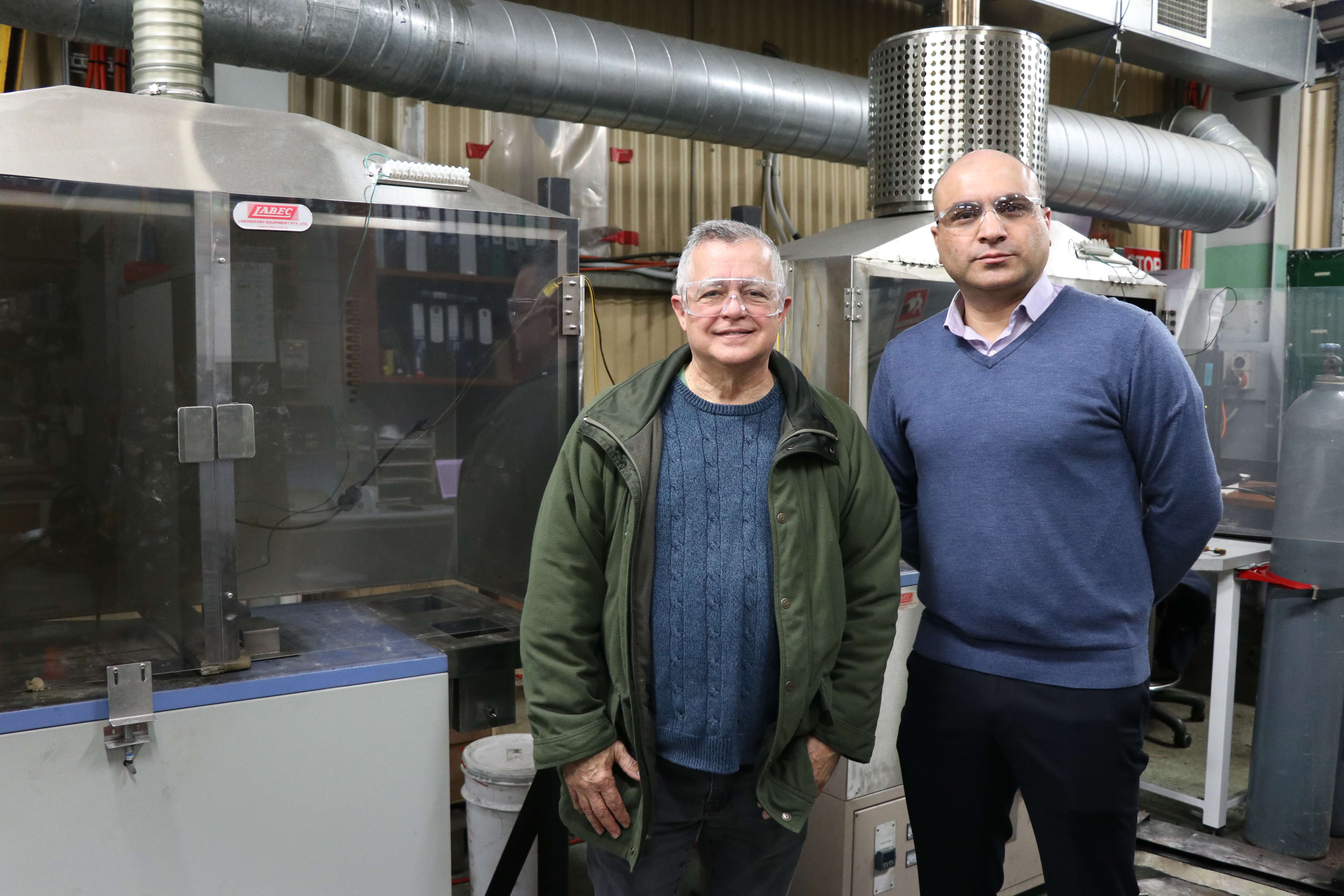
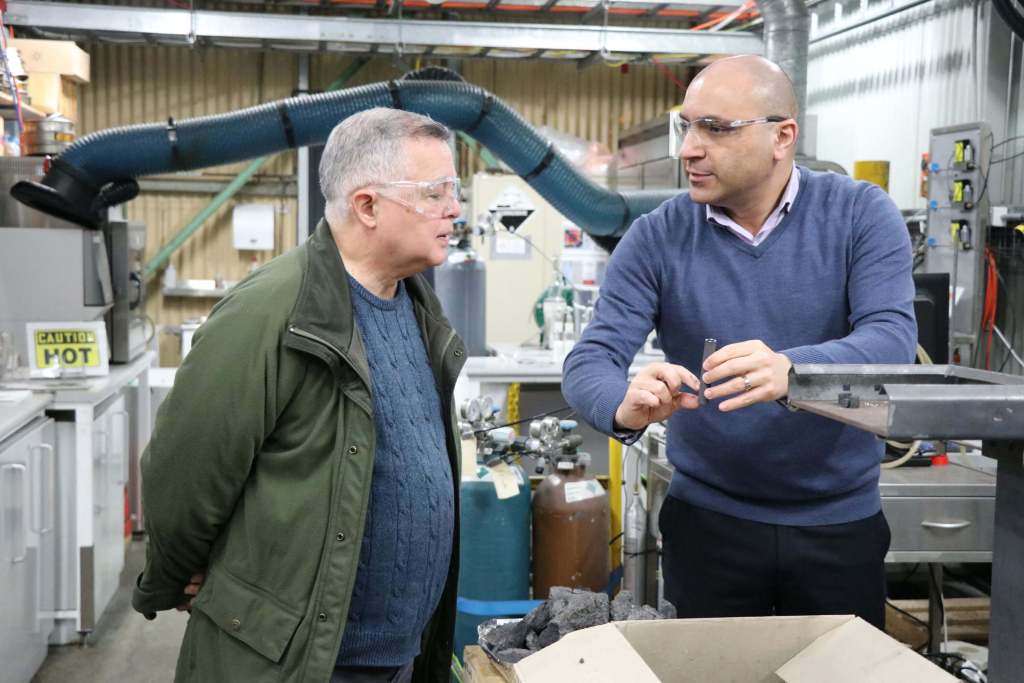
Through word of mouth, they heard about the TRaCE program and were connected with Dr Arash Tahmasebi, Co-Director of the Centre for Ironmaking Materials Research at the University of Newcastle.

Dr Tahmasebi and his team are renowned for their expertise in this research area, having secured over $8.7 million in funding to advance sustainable and low-carbon ironmaking technologies.
“Through pyrolysis, the waste is thermally decomposed into hydrogen and hydrocarbon. Industrial ovens collect the gas that’s generated in the coke oven and generate electricity from it in a boiler, or inject directly into blast furnace to further reduce the fossil carbon input,” said Dr Tahmasebi.
“What we’re trying to do is substitute part of the fossil carbon or the coal with SynCoalTM, using less coal in the process and increasing the value of the gas product in the system.”
“This process allows us to turn plastic waste into a very valuable gas that can be used in a critical industry, avoiding it being buried in landfill or thrown into the ocean.”
– Dr Arash Tahmasebi, Director of the Centre for Ironmaking Materials Research at the University of Newcastle.
Mr Atayde says that the hybrid coke would give industry more time to explore other methods to reduce their greenhouse gas emissions.
“This project will not only make our resources last longer but will give researchers time to perfect technologies that will enable the full transition,” said Mr Atayde.
If successful, ARC Ento Tech’s vision is to license the system to landfill sites around Australia.
The TRaCE difference
The ARC Ento Tech team has had positive experiences working with universities previously but has experienced nothing like the TRaCE team’s speed and drive to get their project up and running.
“The TRaCE team thought of every way to connect us with the researchers at the University. They looked for the connections and made them for us, and when they found this opportunity, they made it happen. In the past, it was us looking for the right researchers. Here, TRaCE were the matchmakers,” said Mr Atayde.
“I’m quite surprised at how quick the whole process was.”
By being involved in the program, Mr Atayde and his team are excited about the potential doors this project will open to work with larger partners in the future.
By the end of the project in March 2025, they hope to improve their understanding of how SynCoalTM can be used effectively in cokemaking applications and identify the upper limit of blending ratios between SynCoalTM and metallurgical coking coal.
Partner with us
TRaCE is a Commonwealth-backed program where our team act as your concierge, guiding you through an ecosystem of support to advance Australia’s manufacturing priorities and contribute to the global push towards Net Zero.
If you’re eager to see what a TRaCE R&D Voucher could do for your business, read more here and get in touch.