
HydGene Renewables is testing if they can expand their biocatalyst technology into new markets with the help of the TRaCE team, partnering with the University of Newcastle to see if farmers could produce eco-friendly fertilisers right on home soil.
The technology
The building block of all mineral fertilizers is ammonia, traditionally made with hydrogen from fossil fuels contributing to approximately 2% of global green house gas emissions. Producing green hydrogen from renewable resources is challenging, as hydrogen is produced in central facilities and is costly to store and transport, making the end product, like green fertilisers, expensive for farmers.
Sydney-based HydGene Renewables aim to answer this challenge. They specialise in biologically engineered biocatalysts that convert agricultural waste, food waste, paper waste, brewery waste and even sewage waste into green hydrogen in a decentralised manner.

The hydrogen can then be converted into renewable energy, used as a fuel or used for chemical manufacturing. As a chemical feedstock, this development alone has massive potential for the hydrogen to decarbonise several hard-to-abate sectors. One area of focus for the HydGene team is exploring its use in agriculture by using it as the primary ingredient in ammonia production for sustainable fertilisers.
Dr Louise Brown, Chief Executive Officer and Founder of HydGene Renewables, said the technology could be a game changer for farmers.
“It could give the power back to the farmers. They’d be able to make fertilisers on-site for their crops using their farming residues such as straw stubble,” said Dr Brown.
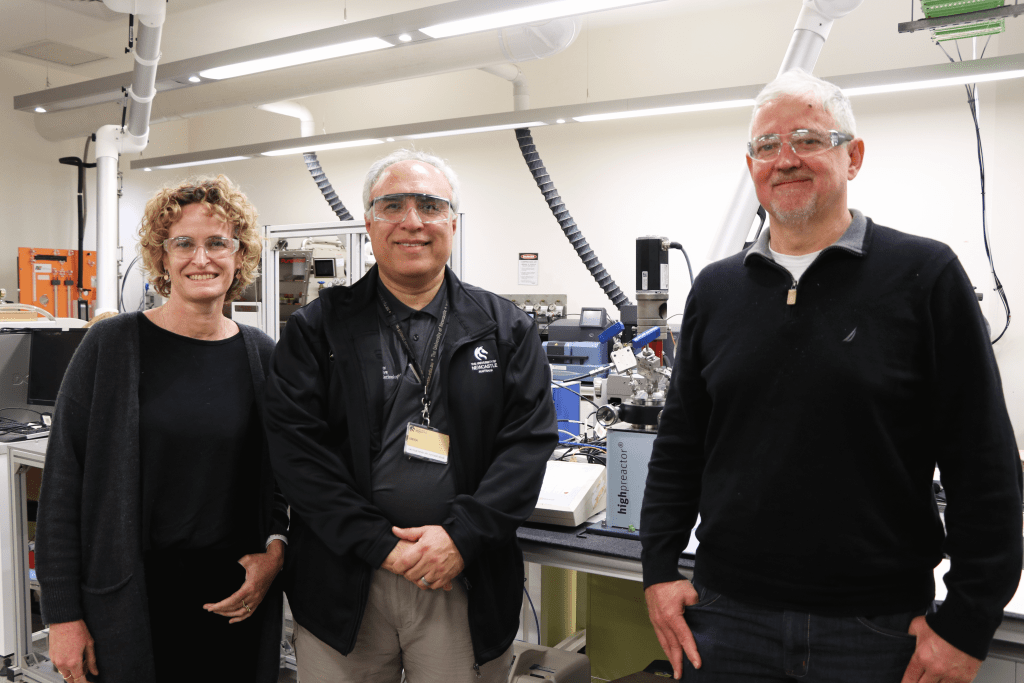
To explore this opportunity for ammonia production, HydGene Renewables has teamed up with Laureate Professor Behdad Moghtaderi at the University of Newcastle.

L/Prof Moghtaderi is recognised internationally for pioneering innovative technologies, garnering over $90 million in competitive funding and leading four projects within TRaCE targeting the development of sustainable fuels and chemicals. His expertise is what drew HydGene Renewables to the TRaCE program.
“You can buy equipment and labs, but you can’t buy the incredible researchers within the University,” said Dr Brown.
L/Prof Moghtaderi is also eager to get involved in the project.
“I’m excited to work with HydGene Renewables on a truly sustainable form of hydrogen production from hydrogen production via biogenic pathways. Their solution has the potential to de-centralise the process, which would significantly reduce costs associated with storage and transportation, making products such as fertilisers less expensive,” said L/Prof Moghtaderi.
Through their TRaCE project, they’ll examine the feasibility for transforming biomass to ammonia, working towards development of a pilot plant at their partner farm, Tait Agriculture.
Working with farmers for farmers
Stuart Tate from Tait Agriculture has provided key insights to the team since meeting them at an AgriFutures farming field day in 2023.
“It’s important we involve the end user in the project. Stuart helps us understand how farmers would realistically integrate the technology into their practices,” said Dr Brown.
“Farmers are eager to learn how to make their processes more sustainable, it just has to be feasible financially to produce fertilisers yourself rather than buy them pre-made. That’s what we’re investigating with the TRaCE project.”

The TRaCE difference
Dr Brown is a former Associate Professor from Macquarie University where she, along with a team of researchers from the laboratory of Professor Robert Willows, now HydGene Renewables’ Chief Scientific Officer, first developed their biocatalysts with ARENA grant support received in 2018. Since those beginnings, HydGene Renewables has spun out and grown its team to seventeen.
To expand into a new market, they needed to continue to work with experts within universities, but they had to be agile.
“Startups have to test fast to show growth to our investors, so agreements need to be in place quickly. Within two months from meeting the TRaCE team at the University of Newcastle, we had created a research project and signed an agreement,” said Dr Brown.
“It’s practically unheard of to enter a research agreement that quickly with a University. If anything, we were the ones to slow down the process!”
The team at HydGene Renewables has since made the trip to the Newcastle Institute for Energy and Resources’ 3.8 hectare industrial precinct at the University to meet L/Prof Moghtaderi’s research team and see their pilot scale equipment for ammonia production up close.
The project, anticipated to finish in August this year, will give HydGene Renewables the information they need to determine if L/Prof Moghtaderi’s technology is the right fit for a pilot plant on Tait Agriculture’s farm, the next step in making on-site production of zero carbon fertilisers a reality.
Partner with us
TRaCE is a Commonwealth-backed program where our team act as your concierge, guiding you through an ecosystem of support to advance Australia’s manufacturing priorities and contribute to the global push towards Net Zero.
If you’re eager to see what a TRaCE R&D Voucher could do for your business, read more here and get in touch.