Australia’s clean energy transition needs more than good technology. It needs researchers who can translate lab-scale science into commercially viable solutions and pathways that bring diverse talent into the room.
The UNSW JEINA x TRaCE Climate Tech Industry Secondment aims to achieve that by connecting UNSW women researchers from migrant and refugee backgrounds with climate tech companies for funded, hands-on placements.
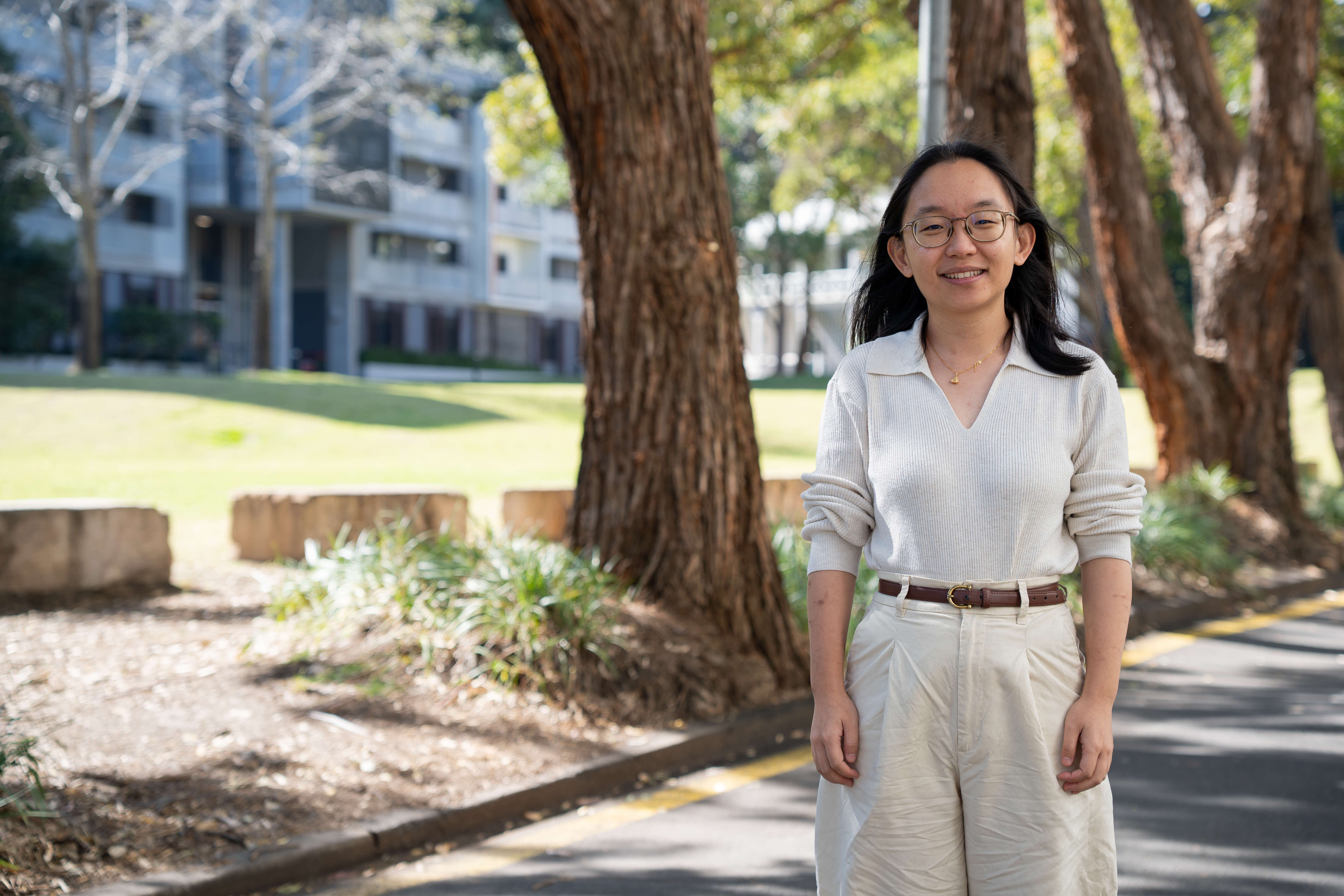
For Dr Lan Wu, a postdoctoral researcher in the University of New South Wales’ School of Civil and Environmental Engineering, bioenergy research has been the focus of her career, turning bio-waste into the fuels that power cleaner industry. The program is the latest step in pushing that work toward real-world impact.
An unplanned path into engineering
Like many students in China, Lan’s academic direction was shaped early. After the competitive college entrance exam, students must commit to a field of study, and with a stronger aptitude for science, engineering was her natural choice. She studied environmental engineering as an undergraduate, then completed a master’s degree in China focused on wastewater treatment.
Moving to Australia for her PhD at the University of Technology Sydney proved pivotal. Under the mentorship of Professor Bing-Jie Ni from UNSW and Dr Wei Wei from UTS, her research shifted from conventional wastewater treatment toward bio-energy recovery, focused on converting biowaste into fuels that behave more like petroleum products than traditional biogas. While a niche area at the time, recent global energy shocks have pushed it into the spotlight, and it’s now central to her work as a postdoctoral researcher at UNSW.
Bringing biotech thinking to CO2 utilisation
Through the UNSW JEINA x TRaCE program, Lan was matched with CO2CRC, one of Australia’s leading carbon management research organisations. They have been building out a new research stream focused on CO2 utilisation, which aims to convert captured CO2 from sources like direct air capture, flue gas or syngas into higher-value outputs instead of only storing it underground.
CO2CRC’s existing work in this space centres on chemical catalysis, a process that requires high temperatures, high pressure and costly catalysts that are difficult to recover and reuse. Lan’s biotech background offers a different route. Biological conversion processes typically run under much milder conditions, which can make them significantly cheaper to operate.
Over her six-month secondment, Lan is providing strategic and technical input, running techno-economic and lifecycle cost analyses to assess whether a biology-based conversion pathway is feasible, and scoping what could be built using existing equipment and facilities across Sydney. The hope is that the work leads to a joint application for co-investment funding, taking the concept further and deepening the cross-university, government and industry partnership behind it.

Why industry collaboration matters
For Lan, working closely with industry isn’t optional for a researcher; it’s the only way the work survives. “If you only want to rely on the income provided by the government or the university, you cannot survive in this market,” she says. “Collaboration is really, really important.”
It’s a philosophy she’s held since finishing her PhD, when she began building industry relationships through consulting work with organisations including TasWater and GrainCorp. As she puts it, “any technology that comes up in a paper, you have to justify whether it’s actually acceptable for the market.” Publications alone don’t convince a company to invest. What matters is whether the technology delivers real value.
A launchpad for greater opportunities
Beyond funding the placement, she says TRaCE has actively created exposure for participating researchers, profiling them to industry, media and potential future partners in ways that would be hard to find alone. For Lan, the real payoff isn’t only the six months with CO2CRC, but what it adds to her network more broadly: sharper commercial instincts, broader connections, and a stronger case for the cross-disciplinary, biology-meets-chemistry research she’s building her career around.
She can’t predict exactly where the collaboration will lead, but she’s confident a wider network means wider opportunity. “The wider the network I develop, the bigger the opportunity,” she says. “The opportunities become more diversified.”
Her story reflects what the JEINA x TRaCE program is designed to do – connect talented women researchers from migrant and refugee backgrounds with the funding, industry access and networks that help turn clean tech research into real-world impact.
About the UNSW JEINA x TRaCE Climate Tech Industry Secondment
UNSW Justice Inclusion Access (JEINA) and TRaCE have partnered to connect climate tech companies with talented UNSW women researchers from migrant and refugee backgrounds. The program is fully funded and end-to-end supported, giving companies direct access to research expertise for three to six months without the cost or admin of a traditional hire.
Learn more at trace.org.au/jeina-climate-tech-industry-secondment.