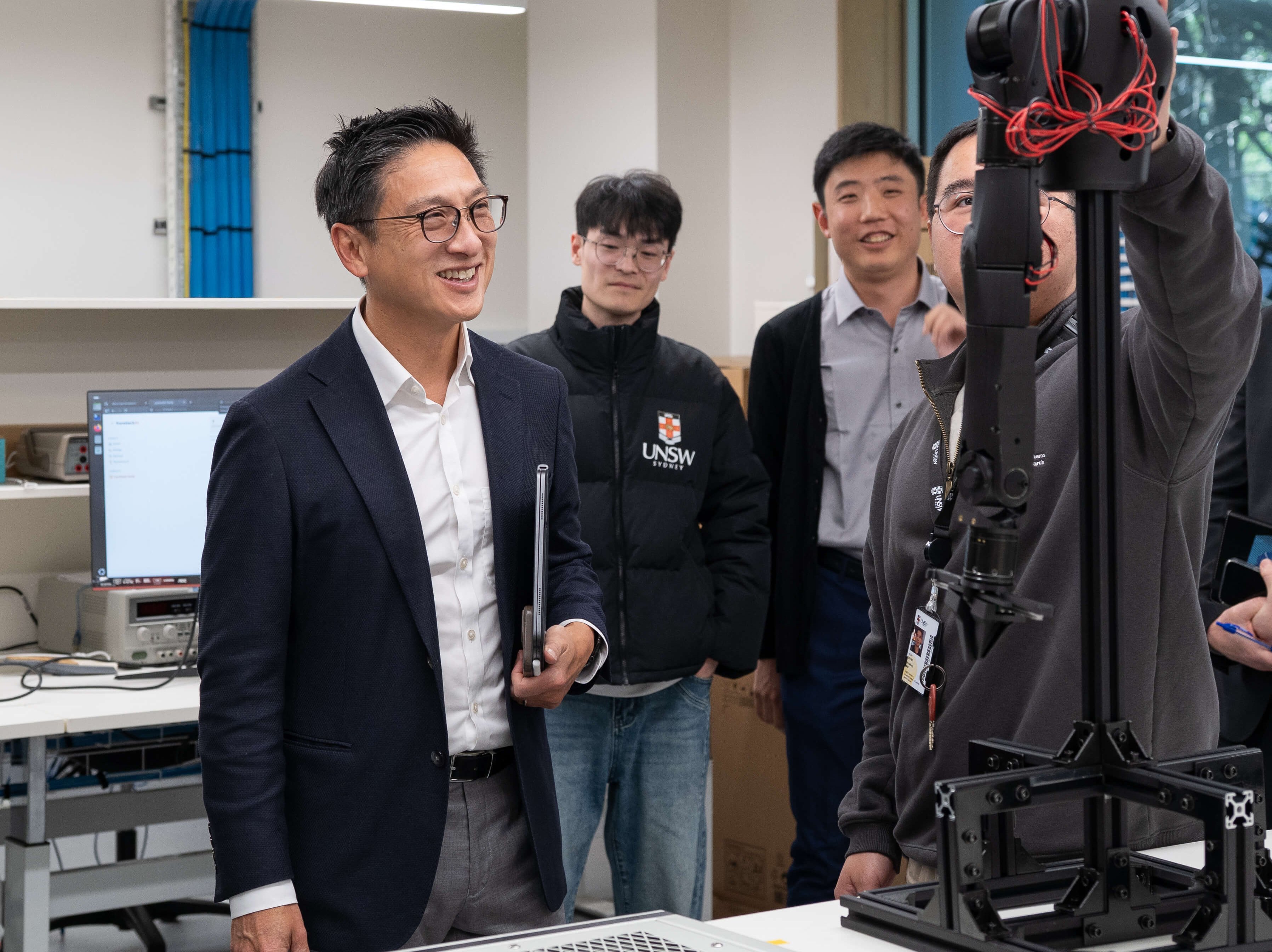
Jason Yat-sen Li MP, Member for Strathfield, visited UNSW’s Kensington campus last month to see how university research is making clean energy more accessible and affordable for Australians.
The visit followed a TRaCE-funded project bringing solar battery storage to apartment residents in Mr Li’s own electorate. Having seen what that partnership could deliver on the ground, Mr Li’s visit to UNSW centred around seeing the models and further examples of what government, university and industry collaboration could achieve.
The day opened with an overview from Deputy Vice-Chancellor (Research and Enterprise) Professor Bronwyn Fox speaking to UNSW’s role in turning research into real-world technology, followed by an overview of the Trailblazer for Recycling and Clean Energy (TRaCE) program, a four-year, government-industry-academia co-funded initiative moving circular economy and clean energy technologies from research into manufacturing, led by Executive Director Professor Emmanuel Mastio and Research and Commercialisation Director Gabriella Nunes.
Professor Serkan Saydam and Associate Professor Rahman Daiyan spoke to how critical minerals research is shaping an inclusive energy transition, a reminder that affordability and sustainability depend on partnerships that stretch right back through the supply chain.
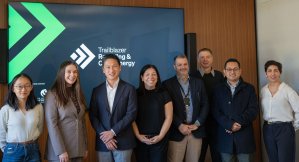
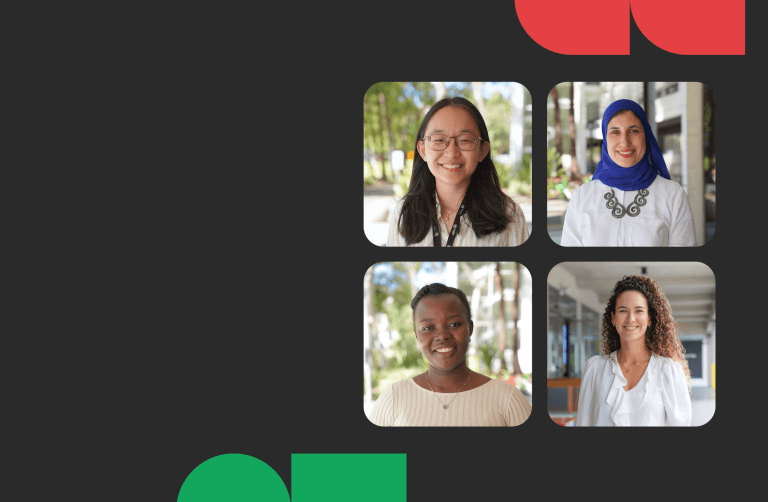
Collaboration extended to who builds that future, too. Mr Li heard from UNSW’s JEINA Initiative, which supports women from migrant and refugee backgrounds into higher education and professional development. Founder Dr Parisa Glass and Dr Lan Wu, a TRaCE x JEINA Fellowship recipient, presented on the opportunities the fellowship’s climate tech industry secondment opens up. It’s a strong example of industry partnership that both builds clean technology and the workforce behind it.
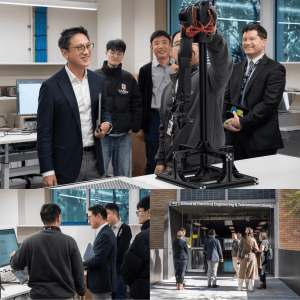
After meeting UNSW Vice-Chancellor and President Professor Attila Brungs, Mr Li toured the Electrical Engineering building with Associate Professor Huadong Mo to see a demonstration of the Sunstack AI partnership project, which turns household renewable energy into computing capacity through decentralised AI infrastructure.
An initial trial program is planned across 2,000 social housing properties, with the potential to offset energy subsidies and free up state budget for other social programs.
No single sector can build an affordable, accessible clean energy future alone. Practical collaborations such as these demonstrate the potential of what happens when government, universities and industry come together.