

Turning microorganisms into clean-up agents: Advancing cleaner technologies for groundwater remediation
An ambitious collaboration between UNSW and Orica, supported through the Trailblazer for Recycling & Clean Energy (TRaCE) program, is paving the way for scalable, low-emissions remediation technology for one of the most persistent industrial contaminants: chlorinated hydrocarbons.
Chlorinated hydrocarbons (CHCs) are persistent contaminants found at industrial sites across the globe. These hazardous compounds, such as vinyl chloride, trichloroethene, tetrachloroethene, and carbon tetrachloride, are byproducts of industrial and chemical manufacturing activities. In the United States, these compounds are present in up to 60% of Superfund priority sites, highlighting the scale and necessity of remediation efforts.
In Australia, the Botany Industrial Park presents a similar challenge with legacy CHC contamination from historic manufacturing activities. In response, Orica took early action by constructing a Groundwater Treatment Plant in 2006, demonstrating its commitment to environmental responsibility. While the plant has played a critical role in managing contamination, its operation involves substantial capital investment and annual maintenance costs. Moreover, the energy-intensive nature of conventional treatment technologies, such as air stripping, high-temperature thermal oxidation, and reverse osmosis, has highlighted the need for more sustainable alternatives. This has driven Orica to explore innovative, low-emission solutions as part of its broader commitment to net zero and safeguarding the environment.
Accelerated natural attenuation: A more sustainable and cost-effective alternative.
The growing global emphasis on sustainability and decarbonisation is driving demand for more environmentally friendly solutions. One of the most promising of these is accelerated natural attenuation (ANA), a technology that harnesses and enhances the natural ability of soil and groundwater microorganisms to break down contaminants. By stimulating microbial activity and redox reactions through carefully controlled nutrient or electron donor delivery, ANA can transform hazardous CHCs into non-toxic end products without the high energy costs or emissions of conventional methods.
A partnership advancing clean remediation through research-industry synergy
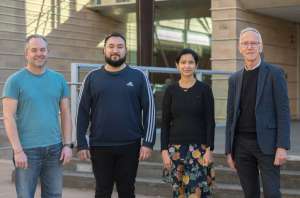
This innovative approach forms the foundation of a new TRaCE-backed project, uniting the deep scientific research capabilities of UNSW with Orica’s on-the-ground expertise and operational capacity. The goal: to develop a commercially viable, decarbonised remediation system that can be implemented not only at the Botany Industrial Park but at contaminated sites worldwide.
“This partnership allows us to tackle an incredibly complex problem from both scientific and practical perspectives,” says Professor David Waite from UNSW. “Our team brings expertise in the fundamental chemistry, microbiology and hydrology behind ANA, while Orica offers deep operational knowledge, regulatory insight, and the ability to implement and scale solutions in the field.”

Through this partnership, researchers will develop predictive models of biogeochemical processes that influence contaminant breakdown, create innovative solutions to on-site reagent generation, and drive decarbonisation by identifying renewable energy solutions for necessary inputs. This project seeks to develop a scalable, cost-effective and low emissions ANA system to remove CHCs. A key focus will be establishing clear commercialisation pathways to enable widespread adoption of the technology at contaminated sites globally.
As industries and governments seek cleaner ways to manage environmental legacies, this project serves as a blueprint for how research and industry can collaborate to deliver impactful, commercial-ready solutions for global CHC contamination, marking a critical step toward cleaner, greener, and more sustainable groundwater treatment.


