Compared to similar countries, Australian homes often lack adequate insulation, making heating and cooling some of the largest energy expenses for households.
This results in higher power bills, increased energy use, and greater greenhouse gas emissions. These impacts could be reduced with improved insulation.
But existing insulation options are not always the most sustainable.
Traditional insulation is often made from glass wool, foam plastics or other energy-intensive materials that are hard to recycle, use raw resources, and contribute to waste and emissions.
SupaCell is working to change this.
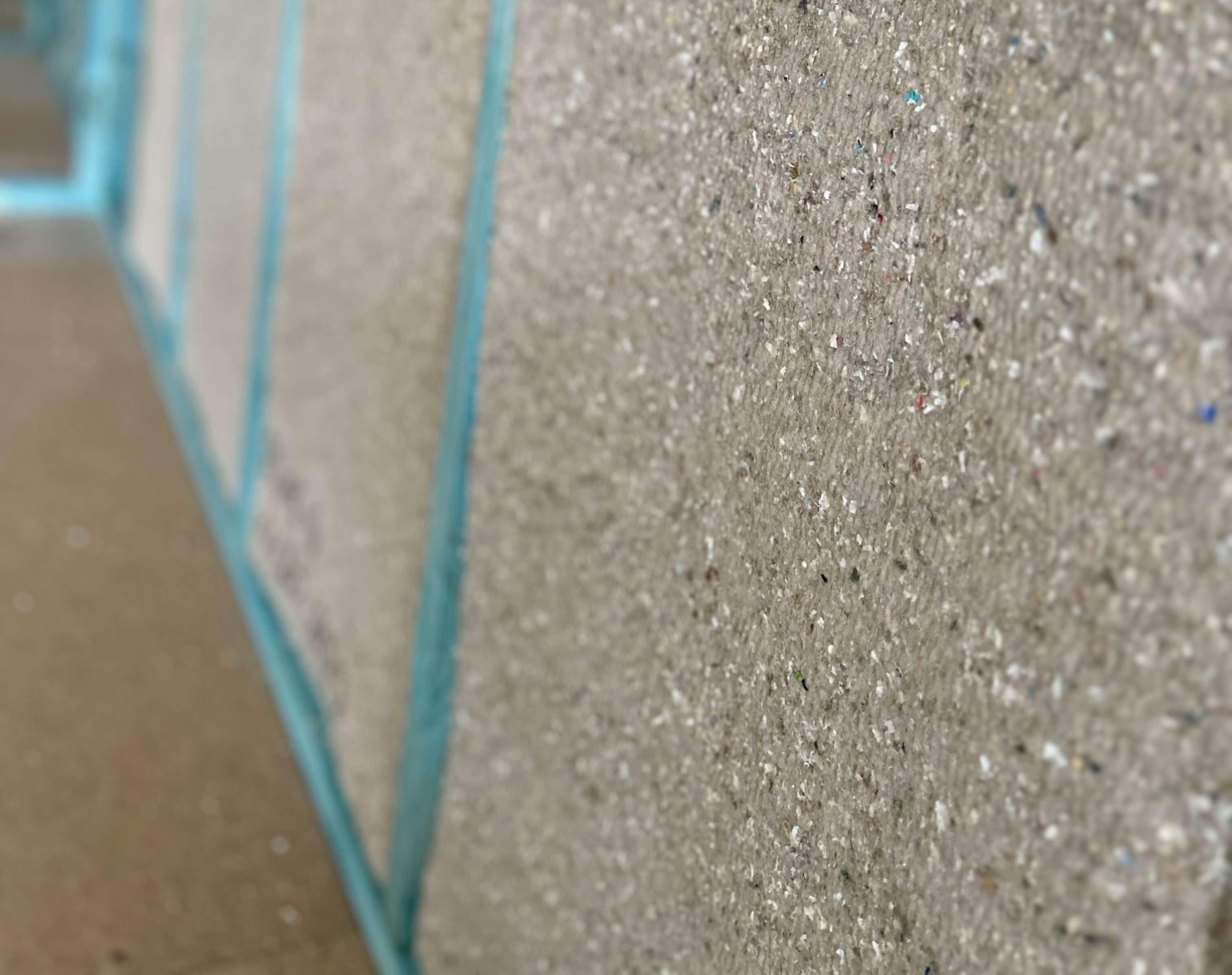
Their innovative insulation product is manufactured almost entirely from recycled cellulose materials (paper and cardboard waste streams) and soft plastics. This offers the same benefits as traditional insulation while creating a valuable reuse pathway for challenging waste streams.
By transforming recycled cellulose materials and soft plastic waste into a high-performance building material, SupaCell’s solution has the potential to both improve home energy efficiency and support a more circular economy.
The benefits that this could have are clear: reduced landfill, lower demand for raw materials, and decreased overall emissions. It also supports Australian manufacturing while offering a potentially equal or superior performing insulation product.
Advancing performance through research
Through a new R&D Voucher project, SupaCell is partnering with Chief Investigator Associate Professor Thomas Fiedler to address a key technical challenge: how the material performs under compression.
When insulation is shipped and stored, it is compressed to save space. Once installed, it needs to recover its original thickness to deliver effective thermal performance. If the material does not fully rebound, its reduced thickness can impact its ability to retain heat, reducing any energy savings.
This project will apply a mechanical testing program to evaluate how well SupaCell’s insulation recovers after compression. It will do this by:
- Applying controlled compression loads to the material
- Measuring its ability to return to its original thickness
- Analysing how any residual deformation affects heat flow and insulation performance
By testing these properties, the project aims to provide the research data to inform how recycled-material insulation can meet the performance standards required for real-world application.
A circular approach to energy efficiency
By repurposing materials once destined for landfill, SupaCell’s insulation represents a promising circular solution for reducing household energy use.
It demonstrates how innovation in materials can address two critical challenges at once: lowering energy demand in homes and reducing problematic waste streams. As research continues, solutions like this could play a vital role in creating more sustainable, energy efficient housing across Australia.