

When TRaCE and the University of Newcastle launched a suite of Clean Energy qualifications in 2024, the vision was clear: equip professionals with the knowledge and skills needed to support Australia’s transition to a clean energy future.
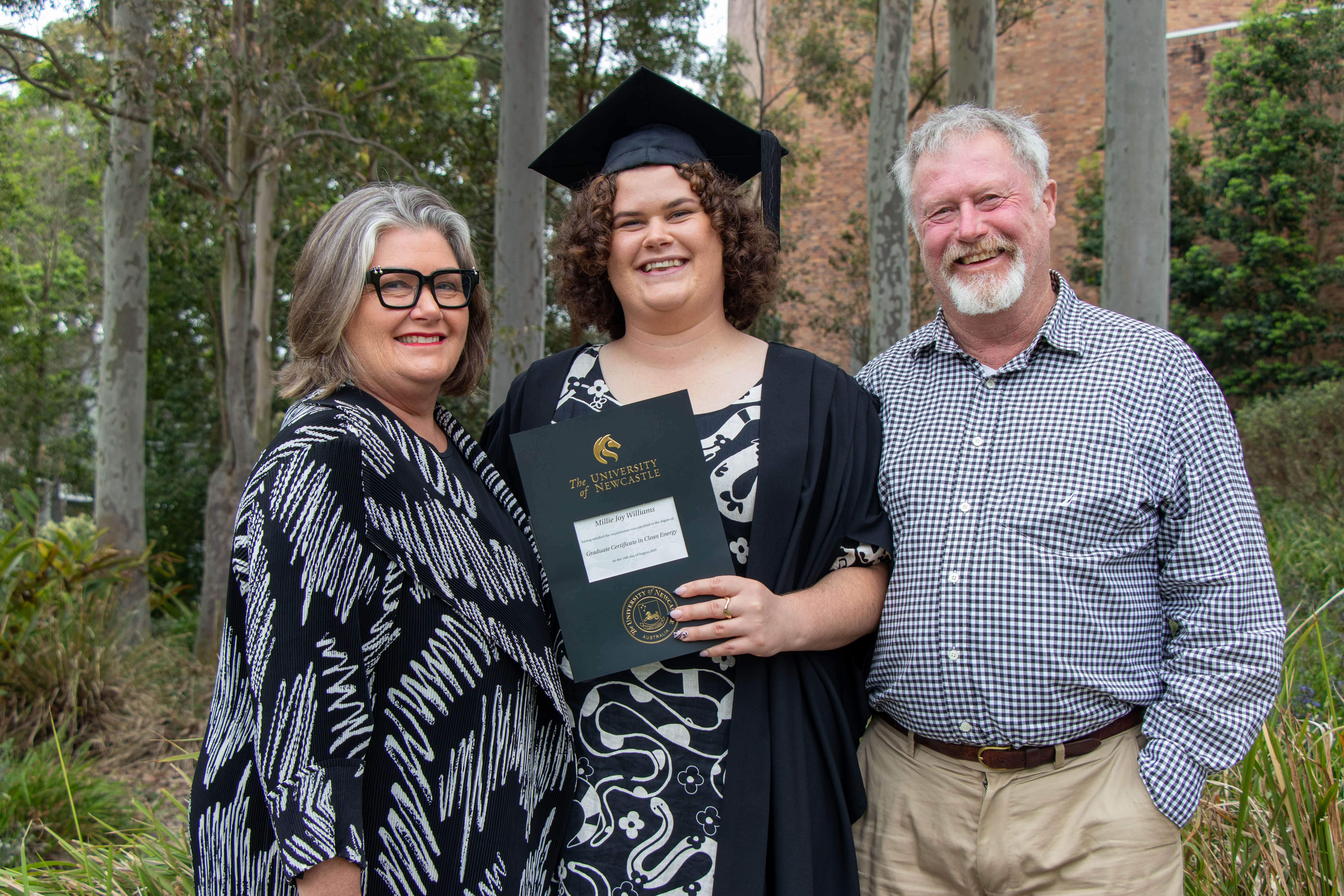
Environmental scientist and energy industry professional Millie Williams has become the first graduate of the Clean Energy program, completing the Graduate Certificate qualification.
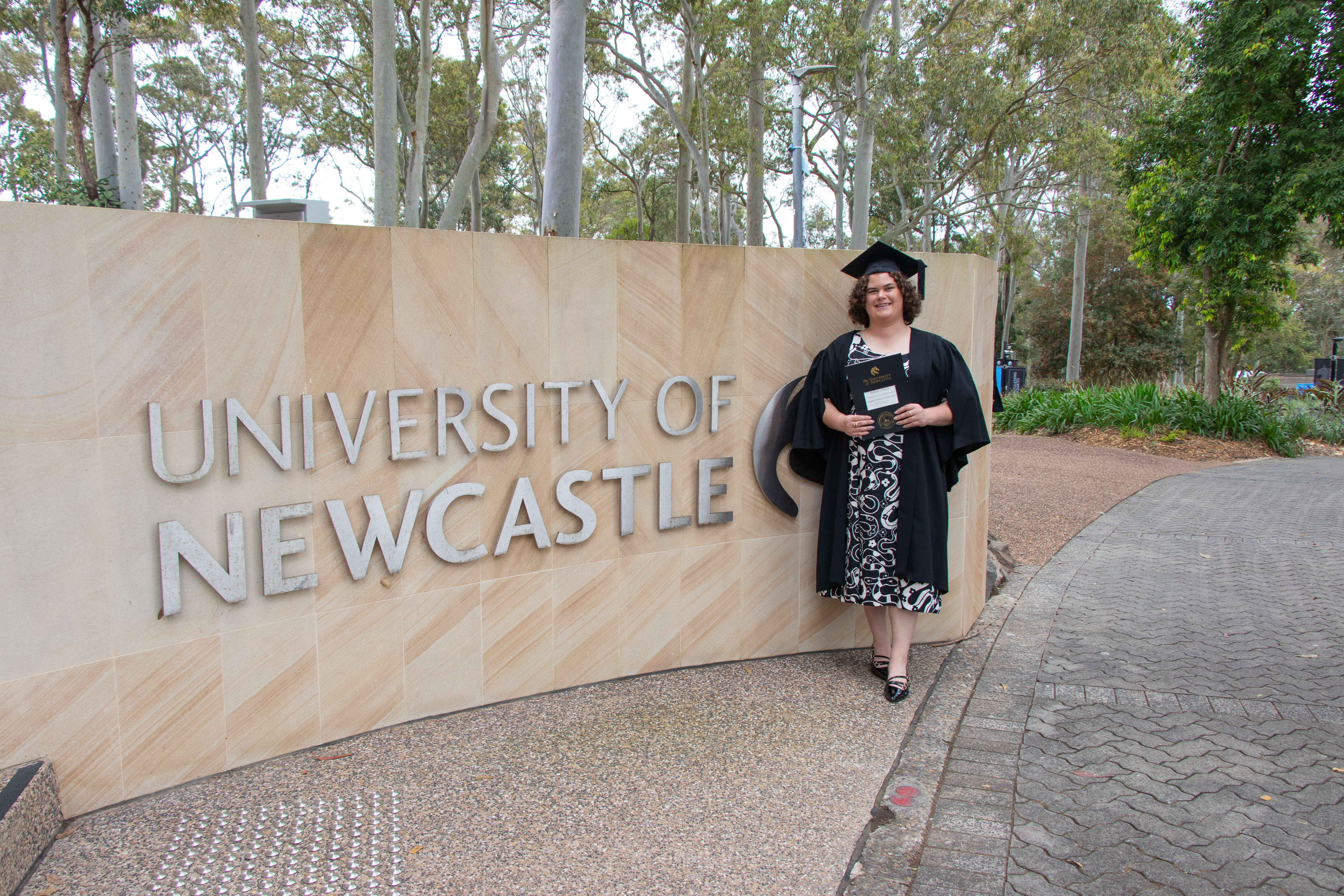
For Millie, graduating from the program is both a personal achievement and an investment in her future.
“I didn’t realise I was the first and it’s a pleasant surprise!” she said.
“I was motivated to complete it and took advantage of the university’s trimester structure to complete courses without having to double up on subjects while also juggling full-time work and other life commitments.”
Building knowledge for a changing energy sector
Driven by a passion for science, nature and the outdoors, Millie completed a Bachelor of Environmental Practice majoring in Corporate Environmental Management. She has since built a career across environmental consulting and advisory roles in the public and private sectors.
In recent years, she has worked on high-voltage transmission infrastructure as a Health, Safety and Environmental Advisor, sparking an interest in the technologies and policies shaping Australia’s energy future.
“Clean energy is essential in supporting a sustainable future for Australia and needed to meet our increasing energy demands,” she said.
“I wanted to gain a broader understanding of the technologies, how they feed into our network and the justification behind the demand of projects which drove me to undertake the clean energy course.”
Designed with industry in mind
Developed through TRaCE’s commitment to industry and workforce development, the Clean Energy qualifications equip professionals with practical, industry-relevant knowledge grounded in real-world energy challenges.
“The University of Newcastle has identified that the industry is going through a massive shift and has clearly recognised that there’s requirement for formal education that supports this clean energy transition,” Millie said.
“The program offered courses that were relevant to my career but also allowed online study and the flexibility for me to complete my course while working full-time.”
Millie said one of the most valuable aspects of the program was learning about the scale and diversity of clean energy initiatives underway across Australia, from state and local government-led approaches through to innovative community-led solutions.
“The course also highlighted the disparity of energy reliability and availability across Australia,” she reflected.
The program deepened her understanding of the opportunities and challenges, including energy demand forecasting, electrification trends and technology selection.
Supporting the workforce behind the energy transition
As investment in renewable energy generation, storage and transmission infrastructure grows, so does the demand for professionals with specialised energy knowledge. TRaCE’s Clean Energy qualifications help meet this need through flexible study pathways.
Millie said her existing industry experience enhanced the learning experience, allowing her to connect course content with real-world projects. She also highlighted the program’s project management components provided transferrable skills across multiple industries.
Thinking back on her journey, Millie said:
“Reflecting on when I finished my bachelors, and unsure of where my degree could take me, I feel fortunate to have built a varied career so far.”
“I’m grateful to have been a part of the program’s inaugural cohort and look forward to the future of the energy industry within Australia.”
As Australia navigates the transition to a cleaner energy future, Millie’s achievement demonstrates the important role industry-connected education plays in developing the skilled workforce needed to meet emerging challenges and opportunities.
Through initiatives such as its Clean Energy program, the University of Newcastle and TRaCE are helping strengthen connections between industry, research and education to support that transition.