Regional councils want to become circular economy hubs and be seen as the land for sustainable enterprise, capitalising on their natural advantage: affordable space that gives circular businesses the freedom to scale.
But a barrier still remains. Councils rarely have the capacity to rigorously explore strategies to attract circular economy businesses to their towns.
TRaCE’s Work Integrated Learning (WIL) Projects program aims to solve this challenge by connecting university students with councils to develop strategies that encourage circular economy businesses to relocate to Forbes.
Forbes Shire Council: Developing a circular economy vision
For Forbes Shire Council, the arrival of TopSoil Organics marked a turning point. When the food and garden organics recycling business chose Forbes as its home, it validated the Council’s Business Development team’s long-held belief that their region had something to offer circular economy enterprises.
The question became: how do we bring more of them here?
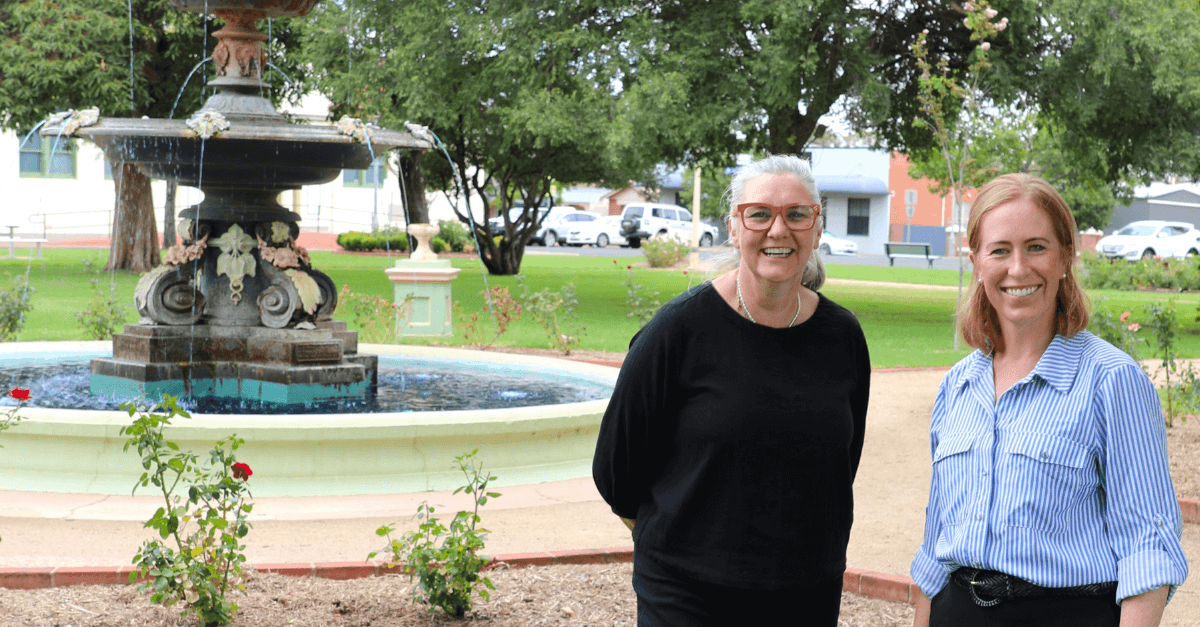
“When you have a strategic role, you should be open to your opinions and thoughts being challenged,” says Amy Strudwick, Business Development Officer at Forbes Shire Council. “And in a way, that’s what the students have done. They’ve made us think differently and from other perspectives, and that’s really been influential.”
Forbes Shire Council partnered with TRaCE’s WIL Program to harness student talent in developing concrete strategies to attract circular economy businesses to the region.

The strategies presented by the student teams ranged from out-of-the-box ideas to immediately actionable opportunities.
One team designed an interactive app concept that would let prospective businesses visualise the financial and strategic benefits of a Forbes relocation, giving the Council concrete numbers to strengthen their pitch to businesses.
Others identified opportunities to strengthen collaboration between regional councils, recognising that collective action across regional networks could support and scale circular economy initiatives far more effectively than any single council working in isolation.
“We almost don’t want to give our secret away,” says Kathy Garland from the Forbes Shire Council Business Development team. “I think programs like these are the future. Every council should be partnering with universities and learning institutions. It’s helping students apply their skills early in their education, while also exposing them to the opportunities available in regional communities.”

A learning model built for regional needs
The WIL project program emerged because TRaCE identified a fundamental constraint for both students and industry partners. Traditional student industry placements, while valuable, are often impractical for regional partners, where hosting students on-site and providing ongoing supervision is not always feasible.
In response, TRaCE worked with UNSW and industry partners to develop a flexible, project-based model that still delivers industry-relevant learning.
The WIL project course allows students to work on industry-informed challenges in a classroom setting under academic supervision, while partner organisations receive structured analysis, fresh perspectives and practical recommendations without the logistical burden of hosting placements.
“It’s amazing watching students’ confidence grow as they work with industry partners, setting them up for their next job or internship,” says Lucy Ngo, WIL Manager at TRaCE. “Many have technical skills and knowledge but are uncertain when it comes to the next step.”
To date, more than 166 students have participated in TRaCE WIL Projects courses, primarily delivered through the UNSW Business School.
For Australia’s circular economy transition, this program is a glimpse of what becomes possible when universities and regional communities work together to co-create strategies that will shape more sustainable and resilient local economies for decades to come.