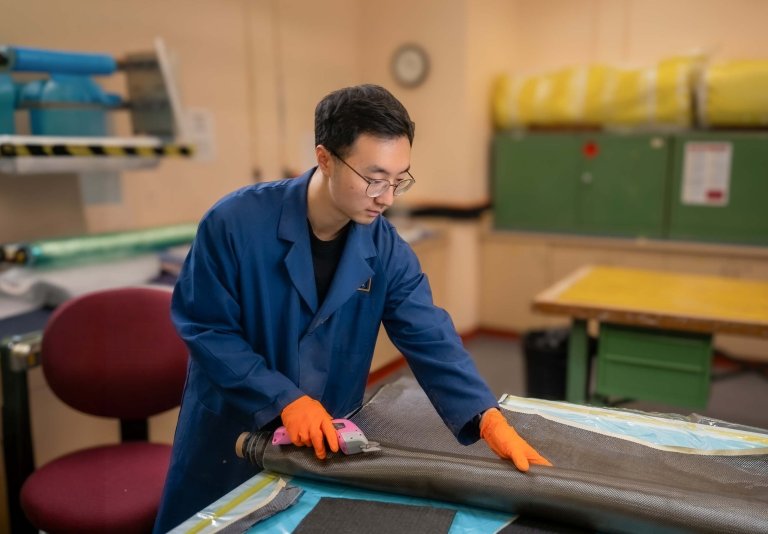
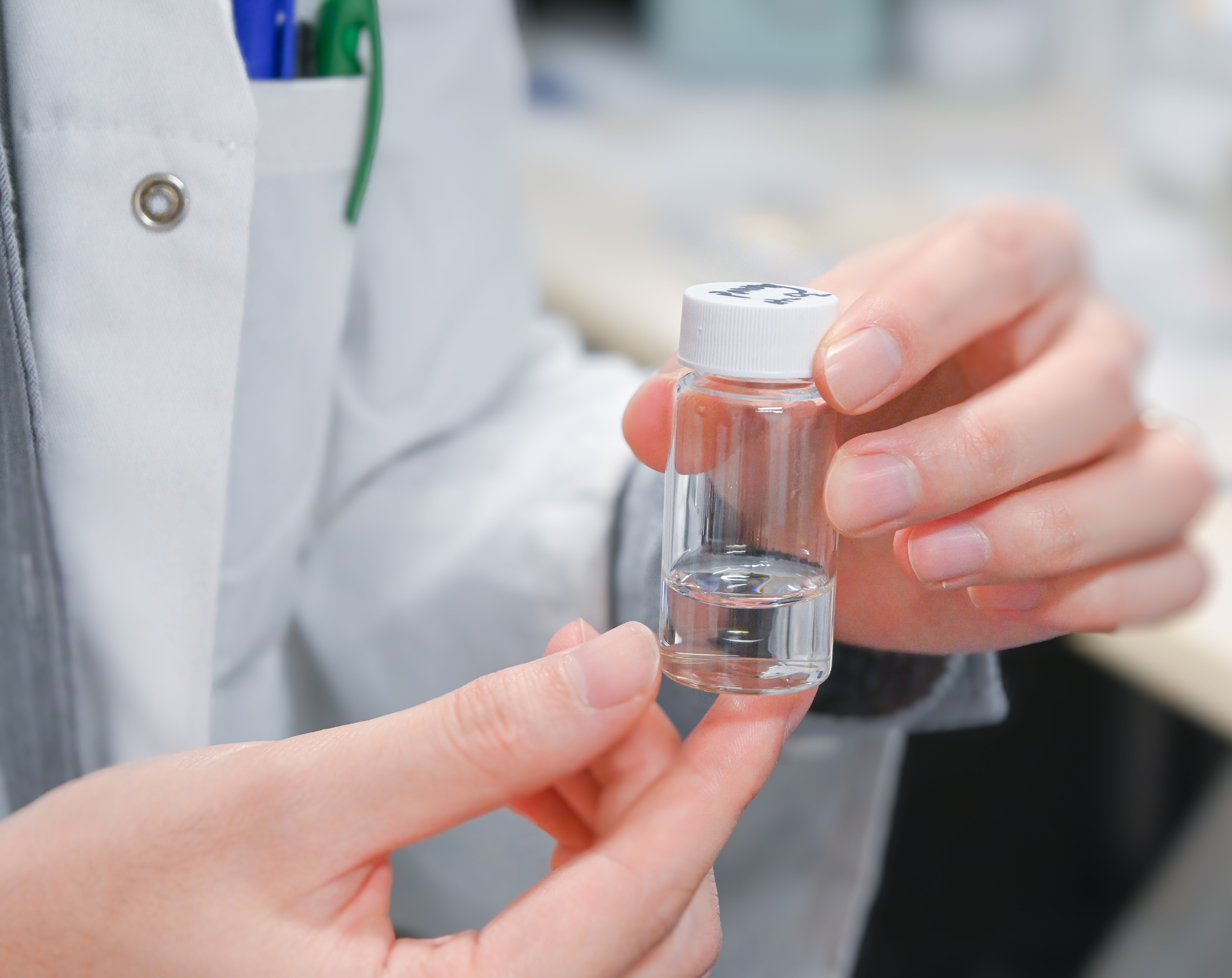
Enterprise Academic Fellow Ding Zhang’s groundbreaking research has the potential to disrupt the hydrogen peroxide industry.

You may have heard about hydrogen peroxide. It’s a versatile liquid commonly used for disinfecting wounds, cleaning surfaces, and cosmetics. Still, due to its powerful oxidising properties, it also plays a critical role in various industries, from agriculture to healthcare. Its global demand is on the rise, with the market expected to reach $4 billion by 2027, and it’s becoming increasingly popular as it’s one of the greenest chemical products.
However, traditional hydrogen peroxide production methods are fraught with challenges, including high energy consumption, significant harmful waste production, and safety risks. Current hydrogen peroxide production methods generate significant carbon emissions, with approximately 3 kg of CO₂ released per kilogram produced across millions of tons produced worldwide each year. Australia relies heavily on imports for this product, as production is predominantly concentrated in the APAC region, which accounts for 50% of the global market.
In response to these issues, Dr Ding Zhang, a researcher at UNSW, supported as an Enterprise Academic Fellow through TRaCE, is pioneering a new method that could change the game for the industry.
Ding is developing a safer, more sustainable method for producing hydrogen peroxide (H₂O₂) through electrochemical synthesis. This method utilises only electricity, water, and air, eliminating the need for hazardous chemicals and significantly reducing the environmental footprint. By coupling this process with renewable energy sources like solar and wind power, Ding’s innovation has the potential to transform how H₂O₂ is produced, moving away from large-scale, centralised production to more flexible, on-site manufacturing.
A green solution for critical industries
The adoption of this technology could revolutionise several industries in Australia and globally. For example, agriculture could promote sustainable farming by reducing the need for harmful pesticides and improving water quality for livestock. In healthcare, the demand for hydrogen peroxide as a disinfectant could be met more sustainably, especially during pandemics like COVID-19. Moreover, the mining industry, a significant consumer of H₂O₂, could benefit from more efficient and environmentally friendly processes, aligning with green mining practices.
A game-changer for supply chains
“The localised, on-site production enabled by the technology could lead to cost savings, reduced carbon emissions, and a more resilient supply chain, particularly in regions like Australia, which currently imports most of its hydrogen peroxide,” Ding said.
Next step: commercialisation
The journey from lab discovery to market-ready technology involves overcoming numerous challenges, from scaling production to meeting industry regulations. This is where TRaCE comes into play.
Ding joined the TRaCE Enterprise Academic Program to leverage its unique resources and network to bring this groundbreaking technology to market. The program provides funding and a comprehensive support system, including mentorship to secure a patent, collaboration opportunities, and commercialisation training.
“At TRaCE, we’re committed to supporting innovators like Ding who are working on solutions that have the potential to make a significant global impact,” noted Claudia Kirkpatrick-Just, program manager at TRaCE.
“We believe that this technology has the potential to set a new standard for hydrogen peroxide production globally.” concluded Gabriella Nunes, Research & Commercialisation Director at TRaCE.
With Ding’s groundbreaking innovation on the horizon, the future of hydrogen peroxide production promises to be significantly more sustainable, with millions of tons of carbon emissions saved, along with enhanced safety.
Ding Zhang would like to acknowledge Dr. Jian (Jeffery) Pan, Prof. Zhaojun Han, Prof. Rose Amal, the Particles and Catalysis Research Laboratories at UNSW Chemical Engineering, and the TRaCE program for their invaluable support and guidance throughout this work.