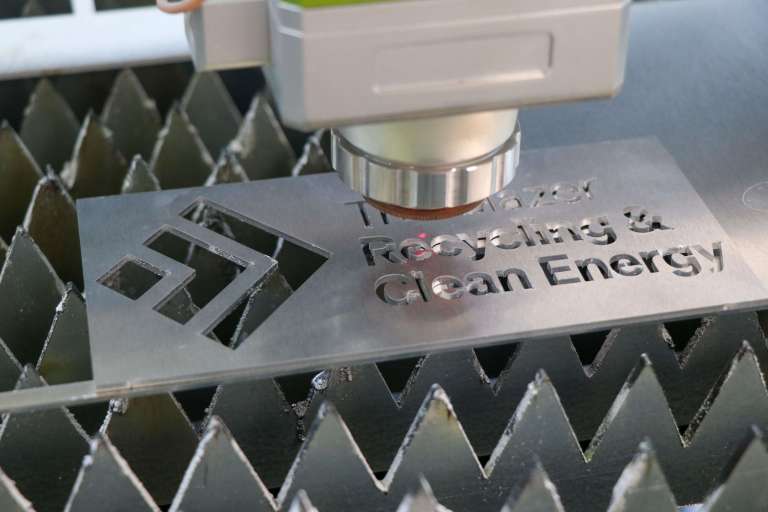
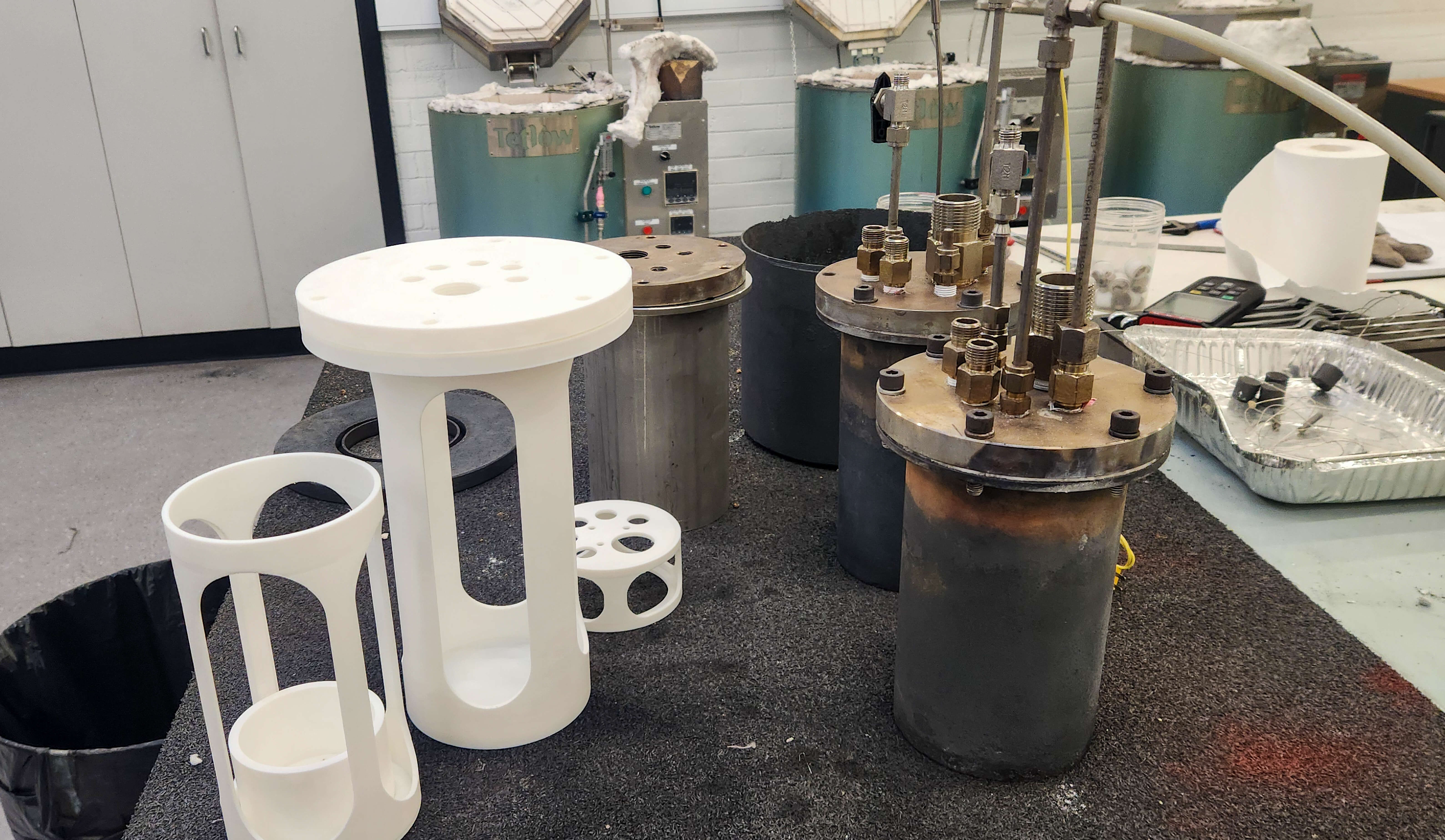
What began as a request to the Modern Manufacturing Workshop (MMW) to replace a corroded furnace component for the BHP Centre for Sustainable Steelmaking Research quickly evolved into an opportunity to improve the design of a specialised test device critical for research and development.
The enquiry came from a research team led by Dr Jessica Allen at the University of Newcastle, who are conducting green steel experiments through an electrochemical conversion. An electrochemical cell is the vessel in which the direct reduction of iron ore to metallic iron occurs using renewable electricity as the driving force. This cell is a key component of broader electrochemical process but reaches the end of its operational lifespan due to the highly corrosive working environment.
From replacement to redesign
While the original request was for a like-for-like replacement of the crucible holder assembly, early discussions between the MMW workshop team and the researchers revealed opportunities to enhance the design and improve the system’s overall performance.
As a specialised test device, the crucible holders were expensive to replace as they had been designed with non-standard pipe sizes requiring custom fabrication work. However, the device is now used by the research team as part of routine testing and requires regular replacement due to the corrosive operating environment.
Key challenges identified included:
- The device operates inside a furnace at temperatures exceeding 750 °C.
- Complex assembly required to set accurate electrode heights.
- Limited visibility of electrode positions after installation.
- Challenges maintaining the required gas environment at elevated temperatures.
Collaborative design for a better solution
The immediate requirement was for an affordable and timely replacement to ensure that research activities were not interrupted. The MMW technical team were able to adapt the existing design to use standard-size materials and fabrication techniques. Resulting in a reduced cost whilst maintaining compatibility with the existing system and ensuring research activities could continue.
With research activities able to continue, the MMW technical team then worked with the researchers to develop a series of concepts to address the broader design objectives.
Through a collaborative review process, ideas were refined, features were evaluated, and the strongest elements of each concept were combined into a new design.
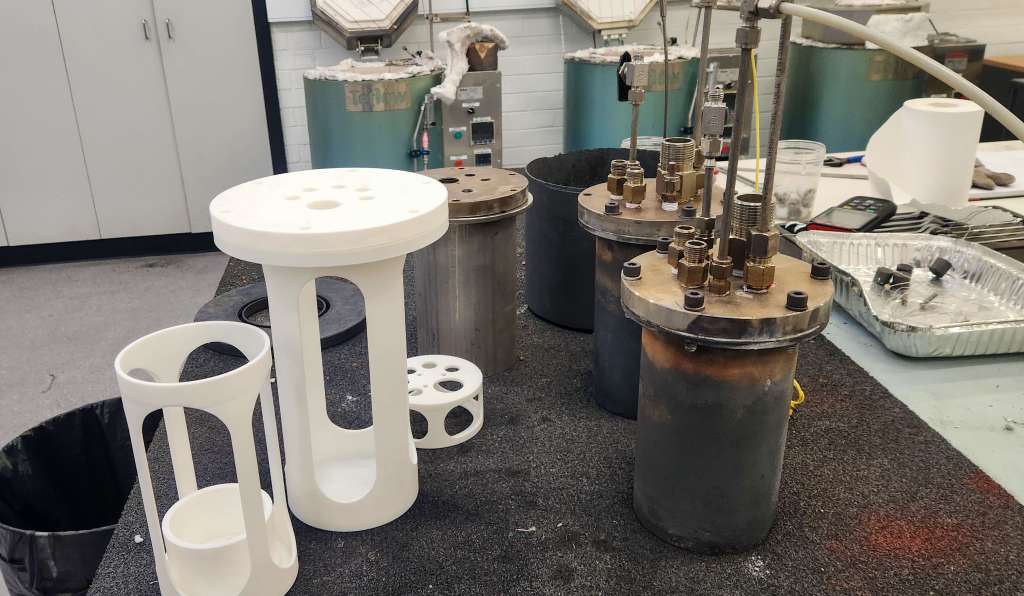
To validate the design, the team produced a low-cost 3D-printed prototype using the Advanced Prototyping Facility (APF). A test fit identified several minor design adjustments that were important in ensuring the final design would integrate seamlessly with the existing research infrastructure.
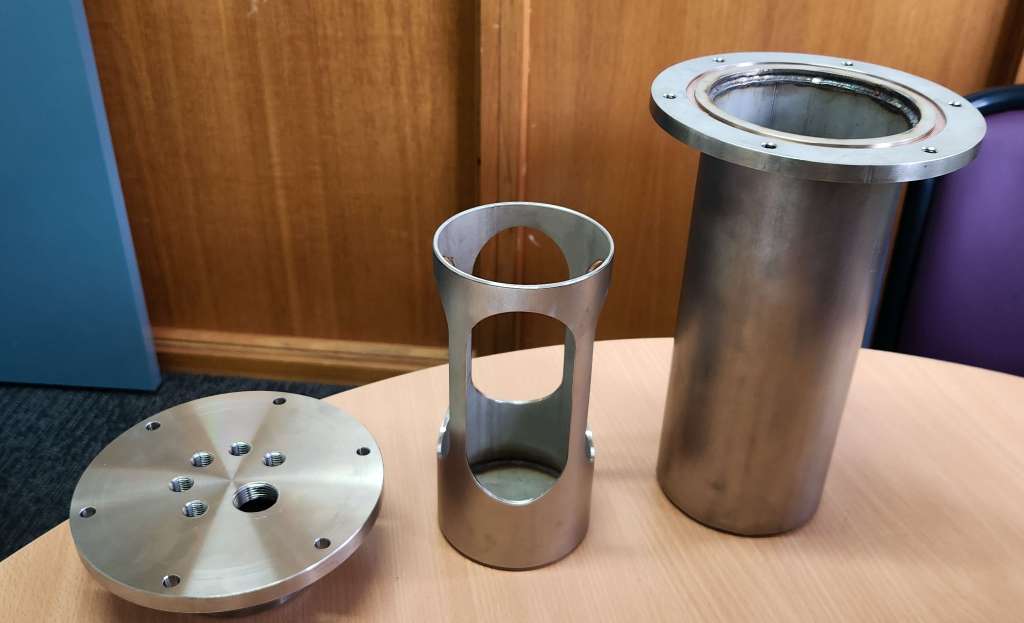
The resulting solution delivered several key improvements, including cost-effective materials and a modular design that enables assembly prior to installation providing far greater accuracy in positioning the electrodes in the system. The design also integrated a secondary seal to preserve the required gas environment and adoption of best-practice machined copper gasket sealing arrangements.
Delivering lasting value
This project highlights the value of collaboration between researchers and technical staff.
By taking the time to understand the operational challenges and explore alternative approaches, the team delivered a solution that not only meets current research requirements but also provides insights into how the technology could be scaled up effectively in the future.
Prototyping the design with a low-cost 3D print before manufacturing with stainless-steel significantly reduced project risk. Having the ability to trial the design with a physical prototype allowed improvements to be incorporated early, avoiding costly modifications to the final stainless-steel assembly.
Importantly, the MMW technical team worked with the researchers to intentionally future proof the design. While the current research focuses on producing green iron from iron ore, the design can now also be adapted for molten salt electrolysis processes used in the production of critical and rare earth metals.
Do you have an idea or design and need access to specialist prototyping and manufacturing facilities? Click here to find out more about our workshop capabilities and submit an enquiry today!