Increasingly, university graduates are choosing career paths and workplaces that resonate with their values and core beliefs. Many students express interest in a career that makes a positive impact, especially when it comes to building a sustainable future. However, it is often difficult to bridge the gap between theoretical knowledge in the classroom and practical application. The Trailblazer for Recycling and Clean Energy (TRaCE) imbues UNSW courses with the cutting edge across circular economy, solar technology and green fuels to ensure students are prepared for life after university.
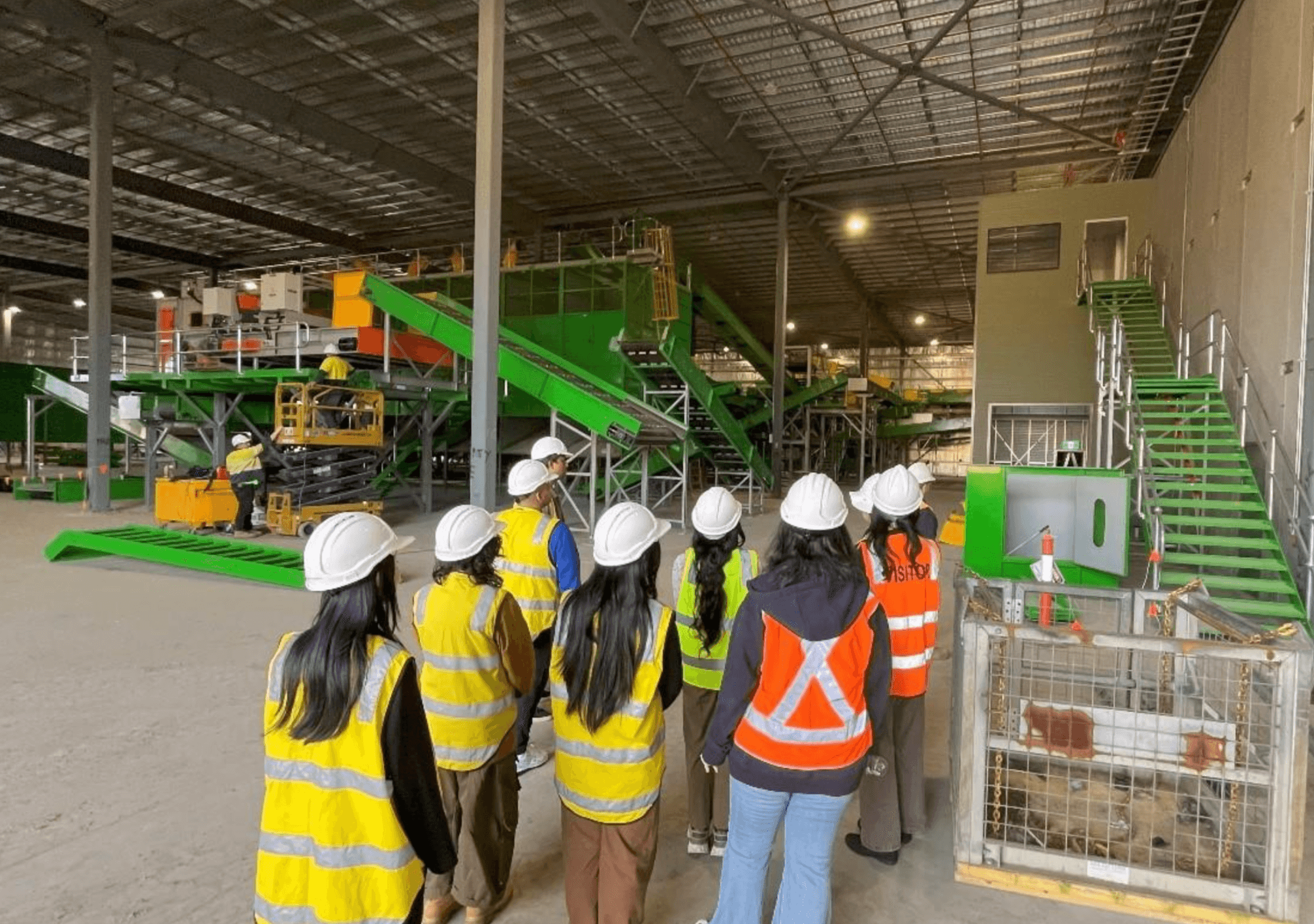
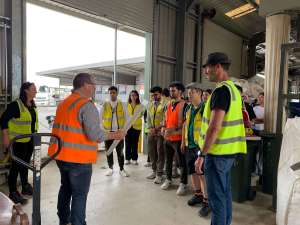
As part of the Future Leader Lab course, TRaCE brought case studies to life by taking students out of the classroom to West Nowra Recycling & Waste Depot, one of ten facilities in Shoalhaven City Council. Every day, the council manages the waste produced by 100,000+ people and up to 400,000 people during peak tourism seasons. It covers an area of over 4500km2, Randwick council pales in comparison at 36.3km2, posing complex logistical challenges when it comes to managing waste.
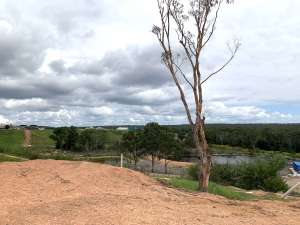
Three hours from Sydney, the site is one of the most innovative recycling and waste processing centres in Australia, if not the world. Nestled in an idyllic setting, the facility is surrounded by bushland and is easily missed despite boasting 14.5 hectares. Much to the surprise of the students, we saw native wildlife including kangaroos resting on grassy hills within the site.
We had the privilege to experience the facility up close with Peter Windley, Project Manager Waste Services at Shoalhaven City Council, who leads the site’s operations and is a champion for circular economy. Peter showed us what it takes to divert 90% of mixed waste from landfill. He has the unique ability to inspire even the most circular economy sceptic. A recurring topic during the course was the balance of individual and corporate responsibility when it comes to producing and managing waste. Many students felt a sense of futility when it came to individual action.
From waste management to resource recovery
Core to Peter’s mission is changing the conversation from waste management to resource recovery to create economic opportunity. Shoalhaven council exemplifies circular economy in practice at a large scale by leveraging innovation and making upfront investment to ensure a better future. This investment has made dividends multiple times over as waste earmarked for landfill is transformed into feedstock or raw materials that are sold locally and across the world.
Australia produces millions of used tyres every year, much of which ends up in landfill. The rubber crumb plant, the first in Australia, takes tyres that were destined to landfill and turns them into rubber crumb and mesh powder. The plant recycles 160 tonnes per year and removes 99% of contaminants to produce a high purity material. The materials are sold to manufacturers to produce road paving, artificial turf and children’s playgrounds.

The facility also includes an electric cable recycling plant to tackle e-waste. Otherwise destined for landfill, the recovered electric cables are processed through a series of density separators, extractors, vibratory screens, and magnetic belts to separate the copper from the plastic insulation and produce copper and plastic granules for sale. Each year, the plant diverts 21 tonnes of copper and plastic from landfill.
Often, Glass bottles and jars are not viable to be recycled back into glass due to heavy contamination. To ensure that this waste is diverted from landfill, a glass recycling plant produces recycled glass sand. The process involves washing and crushing glass containers to a specific size, determined by the end-use. As part of the closed-loop water usage on site, treated landfill leachate water is treated to wash the glass. Water from the leachate pond is treated to remove PFAS contamination and is pumped into a constructed wetland to be filtered using natural reeds. The glass sand is largely used in infrastructure projects as backfilling material or blended for road construction, but it has also been used to produce interior building material.

Styrofoam or expanded polystyrene is a popular packaging material for protecting fragile items, it is notoriously known to be non-recyclable and ends up in landfill. However, the polystyrene recycling machine at West Nowra Recycling and Waste Depot shreds and heats the polystyrene to shrink it to 10% of its original size. The resultant hardened plastic is sold to manufacturers that transform it into new plastic products.
Balancing people, planet and profit
The revenue generated through resource recovery is able to offset the cost of waste disposal for residents. Shoalhaven council offers household and garden waste disposal vouchers to ratepayers enabling the disposal of excess household waste at no cost. After disposal, the garden waste is pasteurised into a mulch-like soil product or shredded garden organics that is available to Shoalhaven residents for free. The buy-back centres (or tip shops) enable working goods to be given a second life, whether they are donated by residents or rescued from landfill. The Community Recycling Centre (CRC) enables residents to dispose of household waste that cannot go into kerbside bins free of charge and accepts over 20 waste streams including paint, gas bottles, fire extinguishers, motor oils, smoke detectors, batteries, lightbulbs and styrofoam.
Investing in the future

Shoalhaven council has invested in the construction of a $37.15 million state-of-the-art Materials Recovery Facility (MRF) at the West Nowra facility. The facility with semi-automatically process yellow-lid recycle bin waste with a capacity of 25 tonnes per year. It has the capacity to receive waste beyond Shoalhaven and across the Illawarra. Using a series of mechanical, electronic and manual processes it will sort the co-mingled recycling stream into individual material types. The facility is set to be operational early next year.
 Written by Lucy Ngo, TRaCE Program Manager