As more Australian households embrace solar energy, lithium-ion batteries are becoming the natural next step for families looking to reduce bills, cut emissions, and gain energy independence. While household battery installation is on the rise, safety concerns remain a key barrier to wider uptake.
Despite their high efficiency and energy density, lithium-ion batteries can pose serious risks, particularly when thermal runaway occurs. This rapid, uncontrolled increase in temperature can lead to fires or explosions. Although rare, these incidents capture headlines and fuel concerns among households weighing an investment in home battery storage.
To tackle this challenge, a new TRaCE-supported collaboration is developing an AI-enabled wireless sensing system that can spot dangerous heat build-ups before they escalate. Non-intrusive and highly accurate, the technology is designed to provide households with an extra layer of safety and peace of mind.
Led by UNSW researchers in partnership with Australian SMEs GinigAI, Trantek MST, and Deepneural AI, the project combines expertise in wireless communications, artificial intelligence, and energy systems to deliver a low-cost, scalable monitoring solution.

The Limitations of Current Household Battery Monitoring
Today’s household battery systems typically rely on internal sensors and built-in management software. While these tools provide basic performance data like charge levels, energy flows and battery efficiency, they are limited in their ability to detect subtle early-warning signs of overheating.
Commonly used contact-based sensors (like thermocouples and RTDs) monitor temperature in close proximity to or direct contact with the battery cell. While precise, they are expensive, complex to install, and usually limited to just a few points inside the unit. This means uneven heating across a battery pack can go undetected.
Additionally, sealed battery systems, common in residential battery designs for safety and aesthetic reasons, also make it difficult to install additional sensors or check internal conditions without voiding warranties.
For families investing tens of thousands of dollars in a home energy system, this lack of transparent, real-time battery monitoring adds to concerns about safety, insurance, and long-term reliability.
A Non-Intrusive Approach to Safer Batteries for Homes
This collaboration, funded through a $360k Lab to Market grant from the TRaCE program, is addressing these challenges with a non-intrusive, AI-enabled wireless sensing system designed specifically for household battery applications.
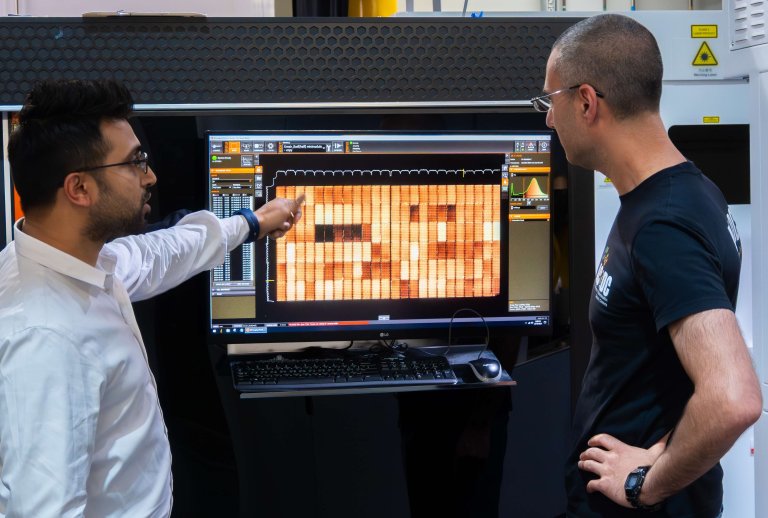
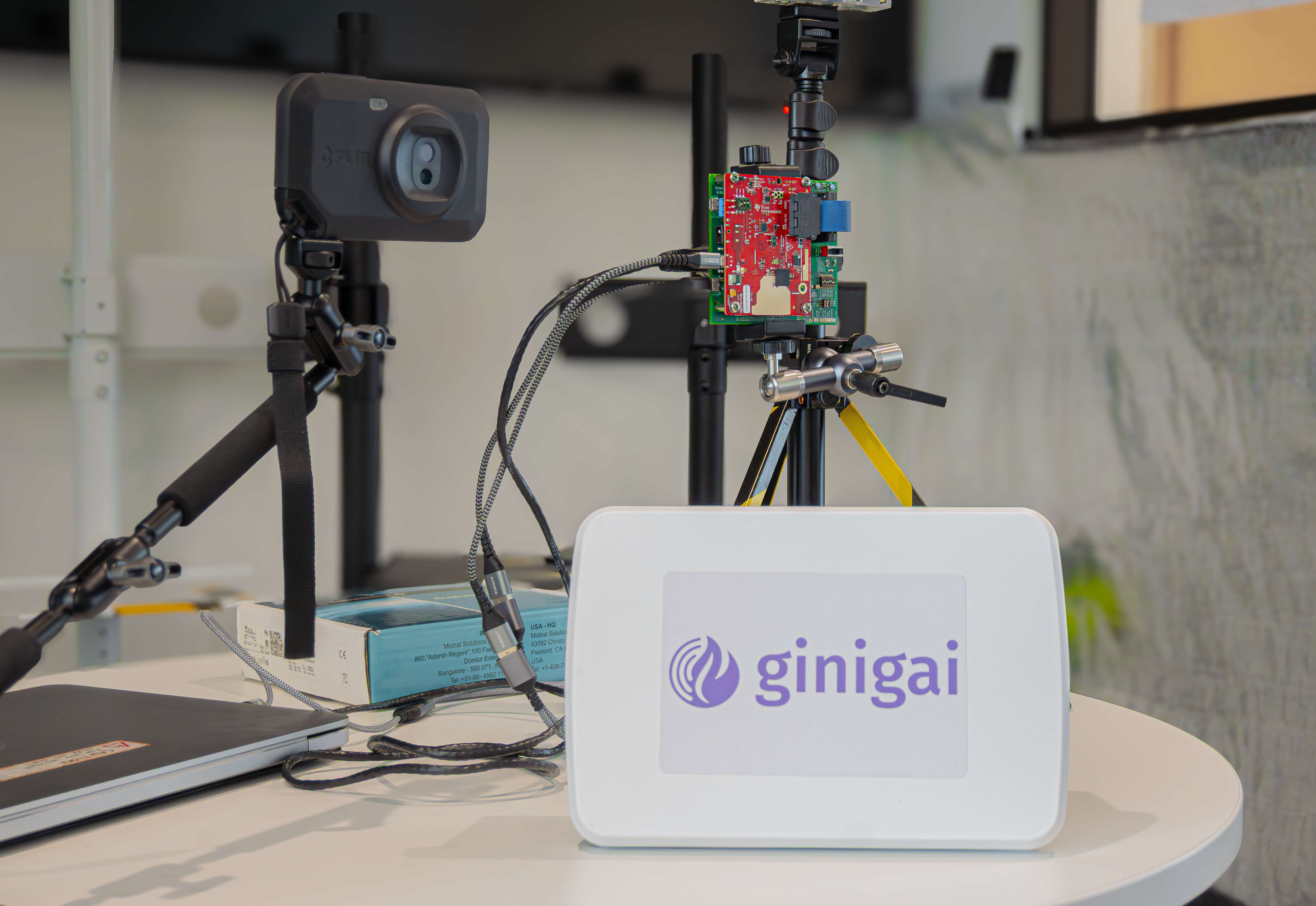
Instead of relying on physical probes or complex wiring, the system uses existing wireless signals like Wi-Fi and millimetre-wave RADAR alongside AI algorithms to detect small shifts in surface battery temperature. As the radio signals interact with the surrounding environment, subtle shifts caused by heat are analysed by AI algorithms to identify early signs of abnormal heating.
Early lab tests have shown the system can detect thermal anomalies with over 97% accuracy without touching the battery or opening the unit.

By leveraging pre-existing wireless infrastructure, these systems can be affordably retrofitted to existing systems in a wide range of environments. From households to remote installations in high-density storage units and transport containers, it offers a highly scalable path to improved battery safety while reducing installation and maintenance costs.
From Lab to Living Room
The project is building and validating a prototype sensor platform ready for real-world household trials on common household battery systems like Tesla, BYD, Sigenergy and Enphase. By quantifying system sensitivity through rigorous modelling and testing, the team aims to deliver a minimum viable product (MVP) that can be integrated seamlessly into home energy systems.
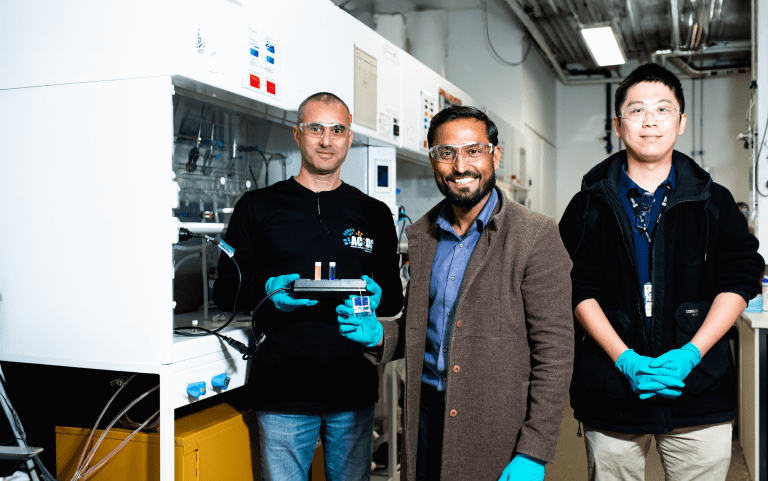
At the core of the project is a strong research–industry partnership. The UNSW team, led by Professor Aruna Seneviratne, Dr Deepak Mishra, and Professor John Fletcher, bring complementary expertise in wireless systems, AI, and energy storage.

“This collaboration allows us to fast-track a technology that could fundamentally change how we manage battery safety,” said Professor Aruna Seneviratne. “By combining cutting-edge AI with low-cost, passive wireless sensing, we’re creating a solution that’s both technically robust and highly deployable in real-world environments.”
On the industry side, three Australian SMEs are playing a vital role in shaping the technology. GinigAI is contributing its patented embedded wireless sensing platform, which underpins the system’s passive detection capabilities. Trantek MST is providing the sensor interconnection system to link, manage, and monitor the platform, while also giving the project team access to its developers and resilient integration technology to help build the MVP. Their expertise in complex, high-risk environments will also open pathways for future commercialisation of the technology in large-scale transport settings.
“Partnering with UNSW and the other collaborators gives us the opportunity to apply our integration expertise to a new frontier of household energy storage. By providing the interconnection system and supporting the initial product build, we’re helping ensure this technology is robust and scalable. Longer term, we see real potential to extend it into complex, high-risk environments like large-scale transport and logistics,” says Lionel Ascone, CEO of Trantek MST.
Meanwhile, Deepneural AI is working closely with UNSW to refine and scale the algorithms for real-time performance.
“We are pioneering advanced AI algorithms that will drive the next generation of wireless battery monitoring systems,” says Saksham Yadav, Managing Director at DeepNeural AI. “Our research focuses on utilising machine learning to identify subtle, hard-to-detect patterns in Wi-Fi and millimetre-wave signals, enabling the prediction of thermal runaway events before they occur. Through our collaboration with UNSW and other key industry partners, we’re transforming cutting-edge AI research into a practical, scalable solution, with the goal of establishing a new global standard for proactive, real-time battery safety monitoring.”
Looking Ahead: From Homes to Industry
The potential of this technology extends well beyond the home. The same low-cost, wireless approach can be applied in large-scale storage facilities, high-density installations, and transport settings, places where conventional wired contact-based monitoring is often impractical or prohibitively expensive. From grid-connected battery farms to shipping containers carrying lithium-ion cargo, this technology provides a scalable pathway to safer energy storage, transport and monitoring wherever it is needed.
As global demand for batteries grows, solutions like this will be vital to ensuring systems of every scale remain not only efficient but safe.