As Australia races toward net-zero, the demand for professionals equipped with sustainability, circular economy and clean-energy expertise has never been higher. A recent report found that by 2030, medium and large Australian businesses expect to need at least one million additional “green-skilled” workers across new and existing roles.
That’s why TRaCE supported 40 students to take the Future Leader Lab to Japan in collaboration with Hiroshima University as part of the Agile Entrepreneurship Development Program through International Collaborative Learning. The program aims to build global, circular-economy-ready leaders who can step into and accelerate Australia’s net zero transition.
Building Future-Ready Circular Economy Leaders
The Future Leader Lab is an experiential learning program delivered in collaboration with TRaCE and UNSW Employability, aligning directly with TRaCE’s mission of nurturing the next generation of professionals in clean energy, recycling and circular economy sectors.
In 2024, TRaCE supported UNSW Employability in uplifting and redesigning the course, embedding sustainability and SDG 11 – Sustainable Cities and Communities into the curriculum. The updated course emphasised key themes such as circular economies, clean energy and sustainable transport, with the aim of ensuring that students gain insights relevant to Australia’s net-zero transition context
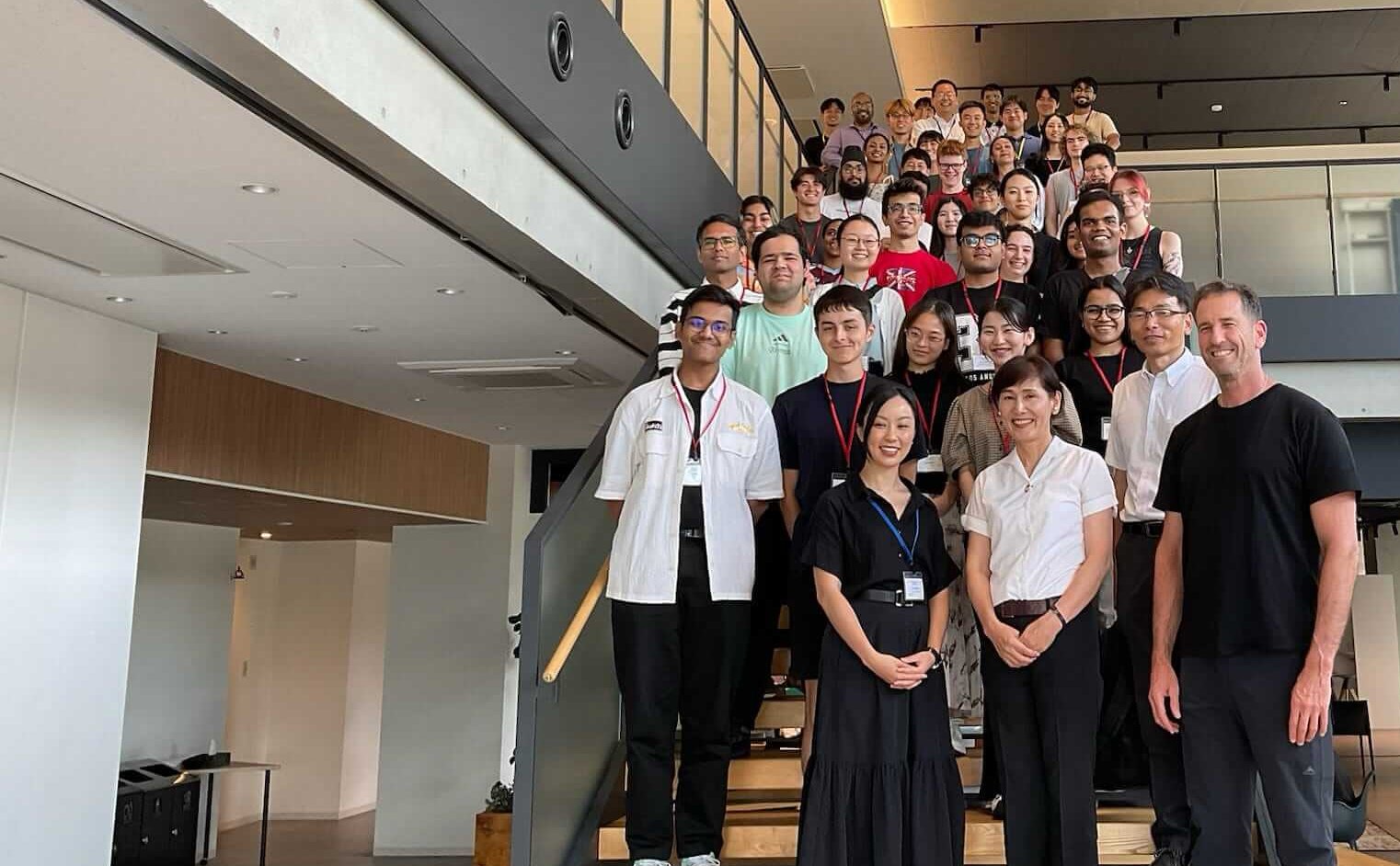
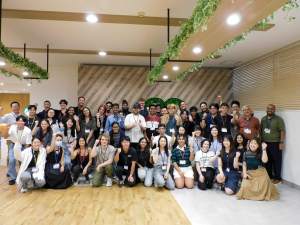
This September cohort was the first time the course was hosted internationally, bringing together students from UNSW, Hiroshima University, University of Sheffield (UK), Birla Institute of Technology and Science Pilani (BITS Pilani), and Indian Institute of Management Bangalore (IIMB) for two weeks of immersive workshops, field visits and cross-cultural collaboration.
Set against the backdrop of Hiroshima’s unique history and innovation landscape, the program provided valuable exposure to Japanese culture and industry, while empowering students to explore how global cities are leading the transition to a circular economy.
A Hands-On Global Classroom
Delivered as part of Japan’s Inter-University Exchange Project and supported by the Ministry of Education, Culture, Sports, Science and Technology (MEXT), the program brought the Future Leader Lab to life through an immersive, interdisciplinary model that blended academic learning with real-world application.
The program brings together students from various disciplines — including engineering, business, policy, design, and urban planning — to collaborate on complex challenges facing cities and industries today. By combining industry engagement, systems thinking, and entrepreneurial problem-solving, students are empowered to develop the adaptability and leadership skills needed to navigate the evolving circular economy.

Throughout the course, students were challenged to identify a “wicked problem” related to the circular economy and design innovative, practical solutions using Agile problem-solving approaches which then culminated in a final pitch to academics and industry experts.
The two-week intensive featured guest lectures, site visits, and field trips, with each showcasing circular economy principles in practice. Key experiences included:
- Hiroshima Chuo Eco Park
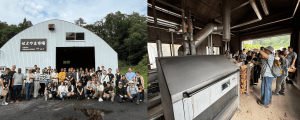
Students toured one of Japan’s most advanced resource recovery and waste-to-energy facilities, where nearly all waste is recycled or converted into energy. The site extracts valuable metals such as lead, zinc, and copper, generates thermal energy, and processes regional sewage through anaerobic digestion — producing bioenergy and agricultural byproducts. Beyond its technology, the facility also serves as a community education hub and disaster response base, demonstrating sustainability through both innovation and resilience.

- Kita-Hiroshima Day Trip
Beginning at Geihoku Kogen Nature Museum, students explored the Yawata wetland, a former agricultural site rehabilitated via hydrological renewal. They then visited a traditional folk house built with local natural materials and low-carbon methods. There they met Katsunobu Shirakawa of the Sedoyama Forest Regeneration Project who leads a project linking sustainable forestry, circular reuse and community revitalisation called the Geihoku Sedoyama Market. Through the program, landowners trade harvested wood for local currency and reclaimed timber is reused in construction, heating and local enterprises.
Student Reflections: Collaboration and Connection
For many students, the program was a deeply transformative experience that went far beyond the classroom.
“I can confidently say that the Future Leader Lab was one of the best university experiences I’ve had,” shared Saii Yashaa, a UNSW student from the most recent cohort.
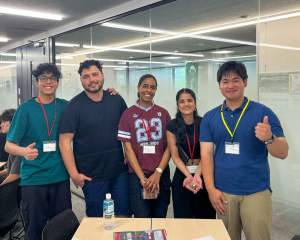
“One of my biggest takeaways was learning how to work effectively with different yet strong personalities in my team. We were able to harness our diverse strengths to our advantage, which made the process both challenging and rewarding.”
“On a personal level, the program reignited the spark of entrepreneurship and innovation within me, reminding me of my passion for creating ideas and driving them into real solutions.”
Saii described the course as “a truly wholesome and enriching experience” that sharpened her leadership and teamwork skills and broadened her perspective through cross-cultural learning.
The Future Leader Lab exemplifies how hands-on, interdisciplinary learning can cultivate globally aware leaders ready to accelerate the transition to a clean and circular future. As TRaCE continues to partner with universities, industry, and government, programs like the Future Leader Lab demonstrate the power of collaboration in nurturing innovation, entrepreneurship, and sustainability literacy across all disciplines.
Learn more about the Future Leader Lab or sign up to join the next Summer 2026 cohort here.