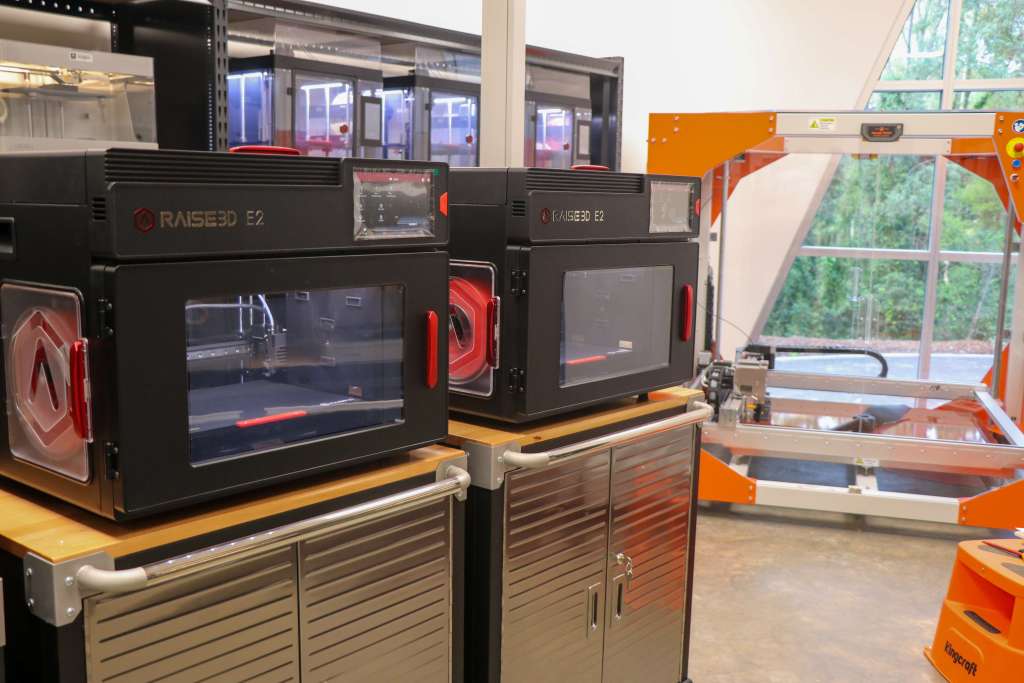

Six months after opening its doors, the TRaCE Advanced Prototyping Facility (APF) at the University of Newcastle is already becoming a popular resource for researchers and students working in clean energy and circular economy innovation. The APF demonstrates its value as a high-impact hub for research translation, advanced prototyping, and industry collaboration. This supports TRaCE’s targets of accelerating technology development, supporting manufacturing, driving emissions reductions, and creating new opportunities for regional industry.
The APF brings together an array of prototyping capabilities, specialist technical expertise, and flexible multiuse facilities to support rapid development of new parts, processes, and technologies. In just its first six months, more than 20 students and 30 research and technical staff have utilised the facility, using it for early-stage prototyping and collaborative research across clean energy, recycling, health, robotics, and circular economy sectors. This growing community of users has already showcased the practical impact of a purpose-built prototyping facility.
Among the early industry collaborations was a project with Tyrex to trial a new method for sectioning recycled rubber for use in a range of access ramps. Through the TRaCE‑facilitated activity, Tyrex worked closely with technical staff to test the viability of their concept, generating valuable data for real‑world recycling and circular economy applications. Tyrex’s recycled rubber products are known for being durable, long‑lasting and hard‑wearing, with applications across residential, industrial, mining, retail, hospitality, disability and aged‑care sectors. Designed and manufactured in Australia, their products reflect the benefits of modern recycling technology, making the collaboration a strong example of how the TRaCE APF supports innovation with meaningful industry impact.
The APF has also become a vital resource for University of Newcastle’s technology-driven student teams and emerging engineers. The University’s Nubots robotics team has accessed the facility more than 60 times, using its advanced tools to prototype components and refine robotic systems for competition and research. In addition, eight final-year engineering students have incorporated the APF facilities into their capstone projects, strengthening their readiness for Australia’s evolving manufacturing sector.
The APF has already supported a diverse portfolio of users from community health initiatives to robotics innovators, and is unlocking new opportunities for students, researchers, startups, and established industry partners alike. The momentum of these early successes underscores the APF’s growing role in regional innovation for translating research into real-world impact.