Strengthening cross-university connections to drive industry innovation
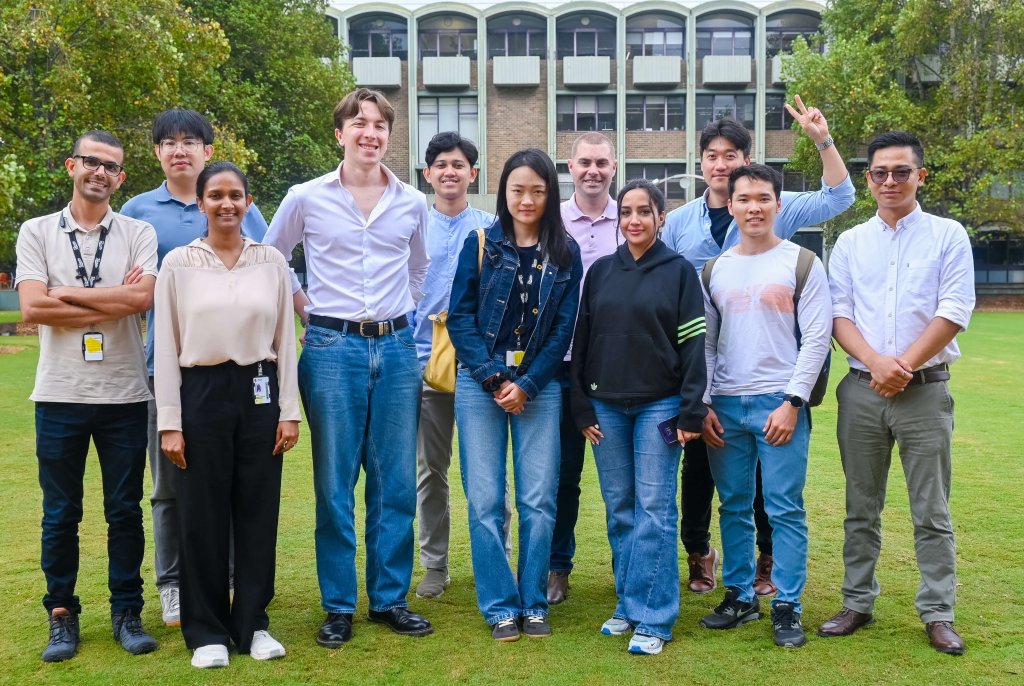
The Trailblazer for Recycling and Clean Energy (TRaCE) team recently brought TRaCE PhD candidates from the University of Newcastle and
Researchers and industry co-designing solutions
The program aims to foster a new generation of researchers, giving them the multidisciplinary context needed to develop future-ready industry solutions.

For HDR applicants: Make real-world impact through your research skills. Enrich your candidature with professional development and build industry networks.
For industry partners: Engage talented research candidates, gain fresh insights and an innovative approach to complex R&D challenges.

Students work on industry-led projects focused on developing commercially viable, market-ready technologies.
Students complete industry placements (30 or 60 day FTE) that provide real-world experience, hands-on exposure, and collaboration opportunities.

Students are supported by a dedicated TRaCE facilitator, engage with a broader cohort, and collaborate with industry partners to shape research aligned with real-world challenges.
At UNSW, TRaCE PhD students take part in an Industry Impact Review, a process designed to help them shape a commercially focused research question and align their work with real-world applications. Through a written report and a panel presentation, students assess the knowledge gap, explore relevant patents, and evaluate the adoption readiness of their research. The objective is to prepare students to engage with industry, strengthen the commercial relevance of their work, and develop a mindset for practical applications.
School of Photovoltaic and Solar Energy Engineering
Xutao is a PhD candidate working alongside Professor Bram Hoex and Professor Gavin Conibeer to improve the efficiency and reliability of commercial Tunnel Oxide Passivated Contact (TOPCon) solar cells.
“As part of the TRaCE program, my work aims to enhance the damp-heat reliability of solar devices and deepen the understanding of laser-assisted firing effects on TOPCon cells. A key goal is to support the development of solar cells with longer warranties and improved stability to ensure the economic and environmental sustainability of PV technology.”
School of Photovoltaic and Solar Energy Engineering
Haoran is a PhD candidate under the supervision of Professor Bram Hoex. Her research topic is to investigate the reliability of advanced silicon solar cells and silicon PV modules. She aims to help the PV industry improve the reliability and stability of the PV modules.
“With the help of TRaCE, I have established close cooperation with the PV industry and gained numerous research resources for my PhD, which has facilitated the smooth progress of my PhD. My research findings also provide valuable insight into improving the reliability of their PV products.”
School of Material Science and Engineering
Bikesh is a PhD candidate working alongside Professor Veena Sahajwalla to investigate the material science that can enable safe and efficient ways to recover aluminium from waste, focusing on packaging that contain thin layers of aluminium and polymer.
“As part of TRaCE, my HDR journey centres on developing improved ways to recover aluminum from laminated waste. I’m dedicated to enhancing recycling practices and supporting the move toward a cleaner, more sustainable world.“
School of Photovoltaic and Solar Energy Engineering
Xutao is a PhD candidate working alongside Professor Bram Hoex and Professor Gavin Conibeer to improve the efficiency and reliability of commercial Tunnel Oxide Passivated Contact (TOPCon) solar cells.
“As part of the TRaCE program, my work aims to enhance the damp-heat reliability of solar devices and deepen the understanding of laser-assisted firing effects on TOPCon cells. A key goal is to support the development of solar cells with longer warranties and improved stability to ensure the economic and environmental sustainability of PV technology.“
School of Photovoltaic and Solar Energy Engineering
Haoran is a PhD candidate under the supervision of Professor Bram Hoex. Her research topic is to investigate the reliability of advanced silicon solar cells and silicon PV modules. She aims to help the PV industry improve the reliability and stability of the PV modules.
“With the help of TRaCE, I have established close cooperation with the PV industry and gained numerous research resources for my PhD, which has facilitated the smooth progress of my PhD. My research findings also provide valuable insight into improving the reliability of their PV products.”
School of Material Science and Engineering
Bikesh is a PhD candidate working alongside Professor Veena Sahajwalla to investigate the material science that can enable safe and efficient ways to recover aluminium from waste, focusing on packaging that contain thin layers of aluminium and polymer.
“As part of TRaCE, my HDR journey centres on developing improved ways to recover aluminum from laminated waste. I’m dedicated to enhancing recycling practices and supporting the move toward a cleaner, more sustainable world.“
Want to learn more about the TRaCE HDR program? Send our team an message at hello@trace.org.au or fill out our contact form.

The Trailblazer for Recycling and Clean Energy (TRaCE) team recently brought TRaCE PhD candidates from the University of Newcastle and

With a team of support behind you, we invite First Nations students to share their knowledge and connection to Country